Table of Contents
- Saint Francis – a friend to every creature
- World Animal Day – from a Berlin sports hall to a global movement
- Animals in the calendar of saints and in folk tradition
- Grief for an animal – as old as humanity
- We also serve – the war animals of Ilford
- Faithful beyond death – animals the world remembers
- Why losing an animal hurts so much
- How to prepare a dignified farewell for an animal
- Urn carriers and candlelit urn sets – a dignified setting for every farewell
- A Franciscan lesson for October
- FAQ – frequently asked questions about World Animal Day and saying goodbye to a pet
- A candle on World Animal Day
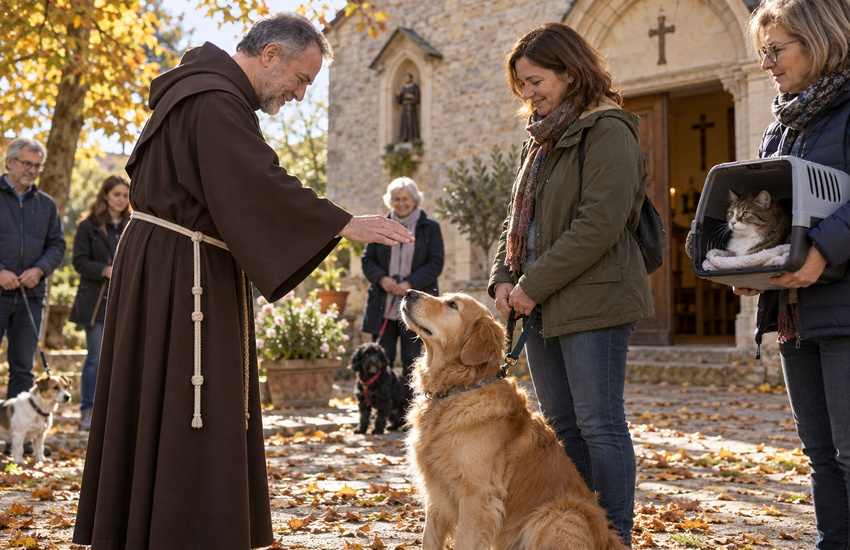
On the first Sunday of October, something remarkable happens in churches across Britain and America. Dogs sit patiently in the pews, cats peer out of carriers, a rabbit twitches its nose on someone's lap and a budgerigar chirps in a cage by the font. At the end of the service the priest walks down the aisle and blesses each animal in turn. In New York, at the Cathedral of St John the Divine, a silent procession of animals – once including a camel, a cow, a donkey, goats and a pair of alpacas – makes its way down one of the longest naves in the world. It is the Feast of Saint Francis of Assisi, patron saint of animals, and it falls in the same week as World Animal Day on 4 October.
There is another side to this bond, however, one we talk about far less often. Animals live shorter lives than we do. Almost everyone who has shared a home with a dog or a cat has, at some point, lived through its death – and knows how deeply that loss can hurt. In this article we look at how people have said goodbye to their animal companions over thousands of years: from the dog burials of ancient Ashkelon and the mummified cats of Egypt, through the Victorian pet cemetery hidden in Hyde Park and the Parisian Cimetière des Chiens, to the war animals of Ilford and the quiet modern ceremony around a small urn. Finally, we suggest how such a farewell can be prepared with care and dignity.
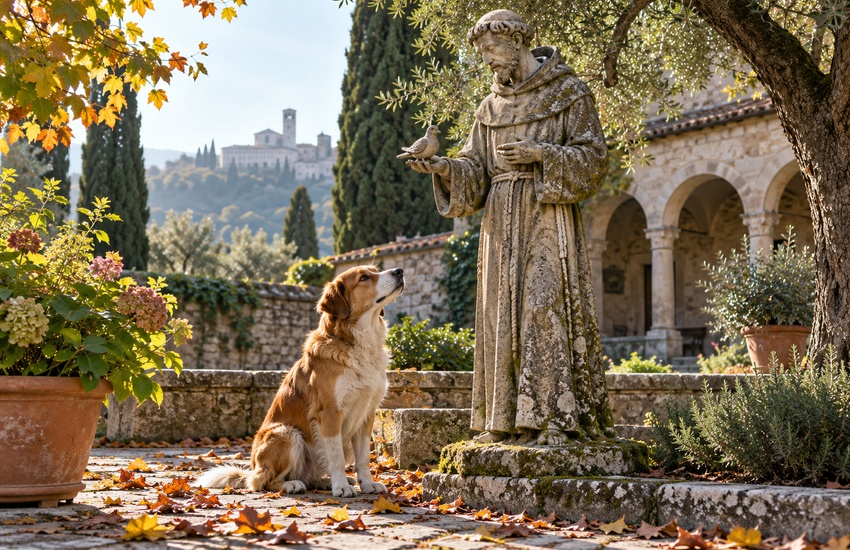
Saint Francis – a friend to every creature
To understand why 4 October became the day of animals, we need to travel back to thirteenth-century Umbria and to a man whose example still moves people of every faith and none.
The merchant's son who chose poverty
Francis was born in Assisi into the family of a wealthy cloth merchant. As a young man he lived a carefree life and dreamt of knightly glory. After his experiences of war, imprisonment and illness he underwent a profound change of heart. He renounced his inheritance, lived among the poor and began rebuilding ruined churches with his own hands. Followers soon gathered around him, and from them grew the Order of Friars Minor – the Franciscans. In 1223, at Greccio, he arranged the first living nativity scene, giving rise to a Christmas tradition still loved today. He died in Assisi on 3 October 1226 and was declared a saint only two years later.
Brothers and sisters
Francis had an extraordinary attitude to the natural world. He believed that every creature was the work of God and possessed its own dignity. He called animals, birds – and even the sun, the moon, the wind and water – his brothers and sisters. In his best-known work, the Canticle of the Sun, he praises God for Brother Sun, Sister Water and Brother Fire, and at the very end also for Sister Death, whom no living person can escape. That gentle phrase, Sister Death, is worth keeping in mind as we read on.
The sermon to the birds and the wolf of Gubbio
Many legends about Francis were gathered in the fourteenth-century collection known as the Little Flowers of Saint Francis. The best known tells of his sermon to the birds: Francis is said to have spoken to a great flock which listened in silence and then flew away in the four directions of the world. Another story concerns a fierce wolf terrorising the small town of Gubbio. Francis went out to meet it, called it brother and made a pact: the townspeople would feed the wolf, and the wolf would no longer attack people or their animals. When, years later, the wolf died of old age, the people of Gubbio genuinely mourned it. It is one of the earliest stories in European literature about grief for an animal.
World Animal Day – from a Berlin sports hall to a global movement
The idea of a day dedicated to animals was born in the twentieth century, and from the outset it was linked to Saint Francis.
Heinrich Zimmermann and the Florence congress
World Animal Day was the idea of Heinrich Zimmermann, a German writer and dog specialist. He organised the first event on 24 March 1925 at the Sportpalast in Berlin, and it drew more than five thousand people. Zimmermann had wanted to hold it on 4 October, the feast of Saint Francis, but the venue was not available that day. In 1929 the celebration moved to 4 October for the first time. In May 1931, at the International Animal Protection Congress in Florence, his proposal to make 4 October a universal World Animal Day was adopted unanimously. It is often said that the day was founded in Florence in 1931, but in fact the congress gave international status to an initiative that already existed.
A British charity at the helm
Since 2003 World Animal Day has been coordinated by the UK animal welfare charity Naturewatch Foundation, which encourages schools, shelters, community groups and individuals around the world to organise their own events. In the week around 4 October rescue centres hold open days, schools run lessons about responsible pet ownership and wildlife, and charities raise awareness of animals in need. In 2025 the day marked its hundredth anniversary – a century since that first gathering in Berlin.
Blessing of the Animals
Alongside World Animal Day, many churches mark the Feast of Saint Francis with a Blessing of the Animals. In Anglican, Episcopal, Catholic and Lutheran parishes across Britain, Ireland and North America, people bring their pets to a special service on or near 4 October. The most famous takes place at the Cathedral of St John the Divine in New York, where for around four decades the first Sunday of October has brought a celebration featuring the Missa Gaia – the Earth Mass composed by Paul Winter and Paul Halley – a silent procession of animals from a rescue sanctuary, and a festival on the cathedral green where clergy bless pets one by one. Smaller parishes keep the custom more simply: a short service in the churchyard, a prayer for the animals and those who care for them, and often a collection of food for the local shelter.
Animals in the calendar of saints and in folk tradition
Saint Francis is not the only patron to whom people have turned on behalf of animals. European tradition knows many more, and several customs connected with animals survive to this day.
Saint Anthony the Abbot and Saint Roch
In southern Europe, especially in Italy and Spain, the great patron of domestic and farm animals is Saint Anthony the Abbot, the Egyptian hermit of the third and fourth centuries. On his feast, 17 January, horses, cattle, sheep, dogs and cats are blessed outside churches – a custom still very much alive in Rome and in many Spanish towns. Another popular protector was Saint Roch, usually shown with a dog at his side. According to legend, when Roch fell ill with plague and hid in a forest, a dog brought him bread every day until he recovered.
Animals at Christmas
Across Europe, old folk belief held that on Christmas Eve animals in the stable could speak with human voices, in memory of the ox and the ass who stood beside the manger in Bethlehem – though it was considered unlucky to eavesdrop. In Britain there was a related tradition that cattle knelt in their stalls at midnight on old Christmas Eve, a belief Thomas Hardy remembered in his poem The Oxen. In Poland farm animals were given a piece of coloured Christmas wafer. These customs show how firmly animals were woven into the life and rituals of rural communities – not as objects, but as fellow members of the household who deserved respect and a share in the celebration.
From working animal to member of the family
Our relationship with animals today is very different. A dog or a cat rarely works for its keep – it is a companion, a friend, a member of the family. It sleeps in the house, has its own name, its own vet, sometimes even its own social media following. This change explains why more and more people feel the need to say goodbye to an animal in a way similar to how we say goodbye to people – with a ceremony, an urn and a place of remembrance.
Grief for an animal – as old as humanity
Looking back through history, we find that care for the remains of animals and the wish to remember them are nothing new. People have been saying farewell to their animal companions for thousands of years.
The dogs of Ashkelon and the cats of Bubastis
One of the most remarkable archaeological discoveries of its kind is the dog cemetery at Ashkelon, an ancient city on the coast of what is now Israel. Dating from the Persian period, some two and a half thousand years ago, it contains the remains of hundreds of dogs, each carefully laid in its own grave. Scholars still debate why they were buried there – whether they were connected with a healing cult or were simply the beloved companions of the city's inhabitants.
In ancient Egypt cats were sacred animals, associated with the goddess Bastet. At her sanctuary in Bubastis and at other sites, enormous numbers of carefully wrapped cat mummies have been found. The death of a household cat was an occasion for mourning: the Greek historian Herodotus records that members of the family shaved off their eyebrows as a sign of grief.
Hyde Park, 1881 – Cherry and Mr Winbridge
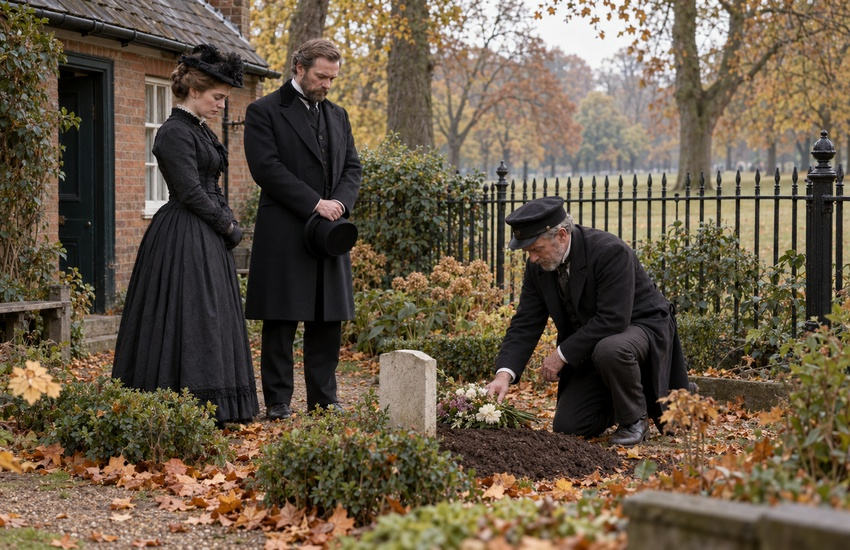
The first pet cemetery of the modern era was created in London, in Hyde Park. In 1881 the owners of a Maltese terrier called Cherry, who in life had loved running in the park, asked Mr Winbridge, the gatekeeper at Victoria Lodge, whether they might bury their dog in his garden. He agreed. Before long, more small graves appeared – mostly dogs, but also a few cats and even monkeys. Burying a beloved pet in Hyde Park became something of a fashion among Victorian ladies and gentlemen. By 1903, when the cemetery was closed, it held around three hundred graves, each with a small headstone and an often touching inscription. It still survives behind the lodge, a quiet corner of Victorian sentiment in the heart of London.
Hartsdale and the Cimetière des Chiens
In 1896, at Hartsdale, just north of New York City, a veterinarian offered part of his apple orchard to a grieving client who wished to bury her dog. From that kindness grew the Hartsdale Pet Cemetery, regarded as the oldest pet cemetery in the United States. Three years later, in 1899, the Cimetière des Chiens et Autres Animaux Domestiques – the cemetery of dogs and other domestic animals – opened on an island in the Seine at Asnières, just outside Paris. It is often described as the first public animal necropolis of the modern world. More than forty thousand animals rest there: dogs, cats, horses and even a lion. It is the resting place of Rin Tin Tin, the German Shepherd who became a star of silent Hollywood films, and one of its best-known monuments honours Barry, the Saint Bernard said to have saved dozens of lives in the Alps. Curiously, the cemetery's founders had to agree that no religious symbols would be placed on the graves – and they are still hard to find there today.
We also serve – the war animals of Ilford
Britain has a unique place of remembrance for animals that did more than keep us company. In Ilford, in east London, lies the PDSA Animal Cemetery, run by the People's Dispensary for Sick Animals. Established in the 1920s, it holds more than three thousand burials – most of them much-loved family pets, but also some of the most decorated animals in British history.
The animals' Victoria Cross
In 1943 Maria Dickin, founder of the PDSA, instituted a medal for animals that had shown conspicuous gallantry in wartime. The Dickin Medal, often called the animals' Victoria Cross, bears the words For Gallantry and We Also Serve. Between 1943 and 1949 it was awarded fifty-four times – to thirty-two pigeons, eighteen dogs, three horses and one ship's cat. The first recipients were three RAF pigeons, White Vision, Winkie and Tyke, whose messages helped rescue aircrews from aircraft that had come down in the sea. The award was revived in 2000 and continues to honour animals serving with the armed forces, police and rescue services.
Rip, Simon and their companions
Thirteen Dickin Medal recipients are buried at Ilford – around a fifth of all the animals ever to receive it. Among them is Rip, a stray mongrel taken in by air raid wardens in London during the Blitz, who found many people trapped under rubble and became the first Dickin Medal recipient laid to rest at Ilford. Also buried there is Simon, the ship's cat of HMS Amethyst. After years of neglect the cemetery was restored in the early twenty-first century with the help of National Lottery funding and reopened to visitors in 2007. Walking among its small headstones, one finds the same tenderness as in any churchyard – names, dates and words of love for those who will not be forgotten.
Faithful beyond death – animals the world remembers
Some stories of animal loyalty became so famous that they were commemorated with statues. They share one theme: an animal unable to accept the loss of a human companion.
Greyfriars Bobby
In nineteenth-century Edinburgh lived a little terrier called Bobby. When his master, John Gray, died in 1858, the dog is said to have kept watch over his grave in Greyfriars Kirkyard for some fourteen years. Local people fed him, and in 1867 the Lord Provost, Sir William Chambers, paid for his dog licence and gave him a collar. Bobby died in January 1872 and was buried just inside the kirkyard gate, not far from his master. A year later a drinking fountain topped with his statue was erected nearby, paid for by the philanthropist Baroness Burdett-Coutts. Historians have long debated how much of the story is literally true, but that hardly matters to the visitors who still leave sticks and flowers at his small red granite headstone.
Hachikō of Shibuya
In Japan the symbol of loyalty is Hachikō, an Akita who accompanied his master, Professor Hidesaburō Ueno of Tokyo Imperial University, to Shibuya Station each morning and met him there each evening. When the professor died suddenly in 1925, Hachikō continued to wait at the station every day for about nine and a half years, until his own death in March 1935. A bronze statue of him was unveiled at the station in 1934, while he was still alive. It was melted down for the war effort, and the statue that stands there today was unveiled in 1948. It remains one of the best-known meeting places in Tokyo.
Wojtek – the soldier bear of Edinburgh
One of the most moving stories links Poland and Scotland. In 1942, near Hamadan in Iran, soldiers of the Polish army acquired a young Syrian brown bear and named him Wojtek. He was taken into the unit that later became the 22nd Artillery Supply Company and was formally enlisted so that he could travel with the men. During the battle of Monte Cassino in 1944 he is said to have helped carry crates of ammunition, and he was promoted to corporal. After the war he was demobilised in Scotland and given to Edinburgh Zoo, where he lived until his death in December 1963. Polish veterans visited him for years, sometimes tossing him cigarettes as they had done in the army. Today bronze statues of Wojtek stand in West Princes Street Gardens in Edinburgh and in Kraków – a shared memorial to an animal that belonged to two nations.
Why losing an animal hurts so much
In the past, grief for an animal was often brushed aside. It was only a dog, people would say. Today bereavement counsellors stress that losing an animal companion can be as painful as losing a person – and that it is right to allow ourselves to grieve.
A companion in everyday life
A pet is present in every single day of our lives. It greets us when we come home, walks with us, sleeps at the foot of the bed, waits by the bowl. It is often with us for fifteen years or more – through house moves, new jobs, the birth of children, separations and illnesses. For people living alone or in later life, it may be their closest companion. For children, it is often their first friend and their first experience of death. No wonder its departure leaves such a gap.
The need for ritual
When a person dies we have a whole set of rituals at our disposal: the funeral, the ceremony, the notice in the newspaper, the gathering afterwards, visits to the grave. They help us express sorrow, say goodbye and receive support from others. For animals, such rituals were missing for a long time. Today more and more people feel that this farewell, too, deserves a form – a short ceremony, a moment of silence, a lit candle, a place to return to. Bereavement specialists point out that a ritual of this kind helps people through the loss, especially children, who learn that sadness is natural and can be shared.
Talking to children about a pet's death
For many children the death of a dog, a cat or a hamster is their first encounter with death of any kind. Child psychologists advise speaking about it simply and honestly, avoiding phrases such as put to sleep or gone away, which can make a child afraid of going to bed or give false hope of a return. Let the child cry, ask questions and take part in the farewell – drawing a picture, choosing a place for the urn, saying a few words. In this way a child learns that sadness after a loss is natural and can be lived through together with the people they love. It is a lesson that will serve them throughout life.

How to prepare a dignified farewell for an animal
Saying goodbye to an animal does not need to be elaborate. It simply needs to be thoughtful and respectful – towards the animal and towards the people who loved it.
Cremation and the urn
An increasingly common choice is cremation at a specialist pet crematorium. The ashes are placed in an urn, which the family can take home, inter at a pet cemetery or, where the rules allow, bury in the garden. Pet urns come in many forms, from simple wooden or ceramic caskets to more decorative designs with space for a photograph, a name and dates. Many pet crematoria offer a farewell room where the family can spend a few quiet minutes with the urn before taking it home. Families who later choose to place ashes in a columbarium niche or a small urn grave can find more on these two traditions in our article Columbarium or Urn Grave? Two Paths of Urn Burial.
A short ceremony
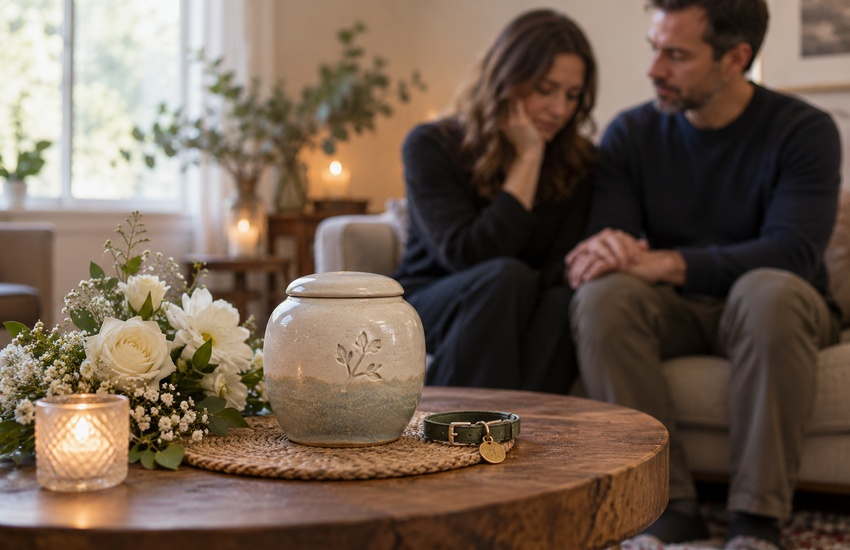
A farewell ceremony for an animal may last only a few minutes. The urn stands in a place of honour, with a photograph and a candle beside it. Members of the family can say a few words about the animal – what it was like, what it loved, something funny it once did. Children may draw a picture or write a letter. Quiet music can be played. If the urn is to be buried, it is good for the family to place it in the ground themselves, perhaps planting a shrub or setting a small stone with the animal's name.
Keepsakes and a place of memory
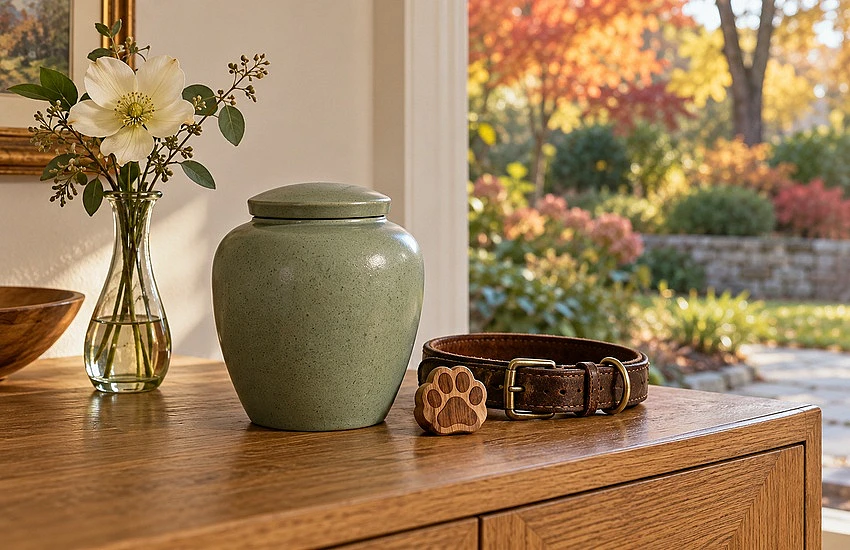
Besides the urn, many owners keep small mementoes: a collar and name tag, a favourite toy, a lock of fur, a paw print in plaster or clay – some crematoria will take such a print before cremation. After the farewell, many people create a small place of memory at home: a shelf with the urn, a photograph and perhaps the collar. On 4 October, World Animal Day, a candle can be lit there. This is not excessive sentimentality, but a natural wish to keep alive the memory of a creature that was part of the family.
Check the rules first
Before burying an urn or an animal's body anywhere other than a dedicated pet cemetery, it is wise to check the regulations that apply where you live. Rules on the burial of animals vary from country to country and sometimes from one local authority to another, and also depend on whether you own the land. Your vet, the crematorium or the local council can advise. The simplest option that always complies with the rules is to use a professional pet crematorium or pet cemetery.
Urn carriers and candlelit urn sets – a dignified setting for every farewell
Professional pet crematoria, pet cemeteries and funeral homes offering farewell ceremonies increasingly use the same equipment that has long served at human urn funerals. That is entirely natural: the dignity of a farewell does not depend on whom we are saying goodbye to, but on how we do it. In our urn carriers category you will find solutions that serve both roles well.
Black urn carrier – safe and steady
The black urn carrier is a modern carrier made of sturdy metal with a matt black powder-coated finish that resists knocks and corrosion. Its base measures 52 × 46 cm and it stands 20 cm high. Three adjustable arms allow it to be fitted to urns of different sizes – from full-size urns for human remains to the smaller urns often used after the cremation of a pet. Each arm has rubber rings that protect the urn from scratches, and the edges of the carrier are fitted with rubber bumpers. Contoured, ergonomic handles mean the urn can be carried steadily and with dignity – from the farewell room to the car, and from the car to the grave or niche.
An elegant alternative is the mirror urn carrier, which gives the ceremony a brighter, more formal character.
Urn carrier with LED candle base – a farewell room in one set
For venues that want to create a complete setting for the ceremony, we recommend the urn carrier with a base and FLAMINA LED candles. The set consists of two parts. The urn carrier, measuring 31 × 58 cm, has a padded base with chrome-plated rings, four arms with rubber collars that stop the urn shifting or being scratched, adjustable to fit most urns, and ergonomic handles; the upholstery is available in several colours. The base, measuring 67 × 63 cm, is also padded, with chrome-plated rings that hold the carrier, and is fitted with battery-powered FLAMINA LED candles operated by remote control. The candles give a warm, flickering light without an open flame – a real advantage in small farewell rooms and in homes where children are present. The set is made to order in Poland.
For pet crematoria and pet cemeteries, such a set can become the heart of the farewell room – the place where a family spends its last minutes beside the urn of a beloved animal, in the soft light of the candles, in peace and quiet. In funeral homes, chapels, churches and crematoria, the same set serves at urn funerals and memorial services.
Who uses urn carriers
Urn carriers are, first and foremost, standard equipment for funeral directors, chapels and churches where urn funerals take place. But the circle of users is growing. They are used by pet crematoria that offer families a proper farewell, by pet cemeteries where the urn is carried from the gate to the grave, by veterinary practices working with crematoria that want to hand over ashes with dignity, and by municipal cemeteries with columbaria, where urns are carried to their niches. In every case what matters is the same: the safety of the urn and the calm of those saying goodbye.
A Franciscan lesson for October
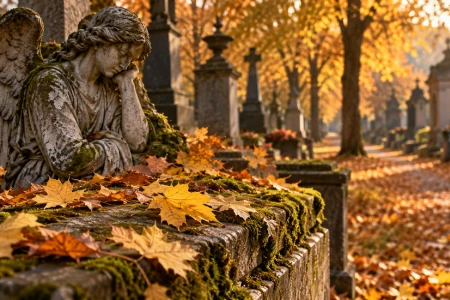
Saint Francis called death a sister. Not because he did not fear it or regret leaving life, but because he saw it as part of the great order of creation, in which everything – people, animals, plants – is born, lives and passes away. The thought has particular resonance in October, when nature itself shows us transience in falling leaves and shortening days, and 4 October reminds us of the bond that links us with animals.
Respect that knows no species boundary
Franciscan sensitivity teaches that respect is owed to every creature, in life and after death. A dignified farewell for an animal does not diminish the seriousness of grief for a human being. On the contrary, it shows that we value the relationships that truly matter to us and that we are not ashamed of sorrow when we lose them.
The memory that remains
Cherry of Hyde Park, Rin Tin Tin on his island in the Seine, Rip in Ilford, Bobby in Greyfriars Kirkyard, the dogs of Ashkelon and the countless animals resting today in pet cemeteries around the world share one thing: someone loved them and wanted to remember them. On World Animal Day it is worth pausing to think about this – and perhaps lighting a candle beside the photograph of a friend who once waited for us by the door.
FAQ – frequently asked questions about World Animal Day and saying goodbye to a pet
Why is World Animal Day celebrated on 4 October?
4 October is the feast of Saint Francis of Assisi, patron saint of animals and ecology, who called all creatures his brothers and sisters. The founder of World Animal Day, Heinrich Zimmermann, held the first event in Berlin in 1925 and moved it to 4 October in 1929. In 1931 a congress in Florence adopted the date internationally.
Who organises World Animal Day today?
Since 2003 World Animal Day has been coordinated by the UK charity Naturewatch Foundation, which encourages schools, shelters, community groups and individuals around the world to hold their own events around 4 October.
Where was the first pet cemetery?
The first pet cemetery of the modern era was created in 1881 in the garden of the gatekeeper's lodge in Hyde Park, London. The Cimetière des Chiens at Asnières near Paris, opened in 1899, is often regarded as the first public animal necropolis. Far older is the dog cemetery at ancient Ashkelon.
What is the Dickin Medal?
The Dickin Medal was instituted in 1943 by Maria Dickin, founder of the PDSA, to honour animals showing conspicuous gallantry in wartime. It is often called the animals' Victoria Cross. Thirteen recipients are buried at the PDSA Animal Cemetery in Ilford, east London.
How can we say goodbye to a pet with dignity after cremation?
A short ceremony is enough: the urn in a place of honour, a photograph of the animal, a lit candle and a few words of remembrance from members of the family. The urn can be kept at home, interred at a pet cemetery or, where local rules allow, buried in the garden.
Which urn carrier suits urns of different sizes?
The black urn carrier has three adjustable arms with rubber rings, so it can be fitted to urns of different sizes. Its base measures 52 × 46 cm, it stands 20 cm high and its edges are protected by rubber bumpers.
What is an urn carrier with an LED candle base?
It is a two-part ceremonial set: a padded urn carrier with chrome rings and four adjustable arms, and a 67 × 63 cm base fitted with battery-powered FLAMINA LED candles operated by remote control. It creates a warm, candlelit setting without an open flame and suits farewell rooms in funeral homes, chapels, pet crematoria and pet cemeteries.
A candle on World Animal Day
October begins with a celebration of animals and ends with the quiet reflection of the season of remembrance. Between the two there is room for gratitude for all the animals that have shared our lives – and for the memory of those that are no longer with us. A dignified farewell, however simple, helps us through the loss and keeps what matters most: the memory of the years spent together.
If you run a pet crematorium or pet cemetery, a funeral home or a farewell room, take a look at the black urn carrier, the urn carrier with LED candle base and our full range of urn carriers. Every farewell deserves calm and dignity.