Table of Contents
- What the home vigil was
- Roots of the custom – from Slavic lament to sacred song
- The home vigil, step by step
- A communal function – why the village needed the vigil
- Where the vigil survived – Kashubia, Kurpie, Podlasie and the Lublin region
- Why the vigil almost disappeared
- Law, hygiene and a new way of keeping the body
- The cooling catafalque – where the body now rests before farewell
- What we lose, and what we gain
- Frequently asked questions (FAQ)
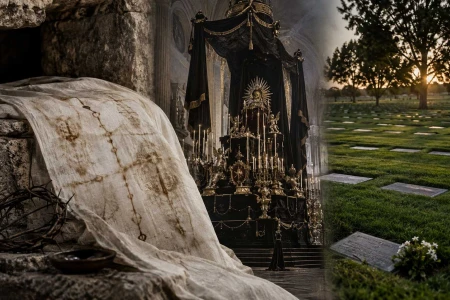
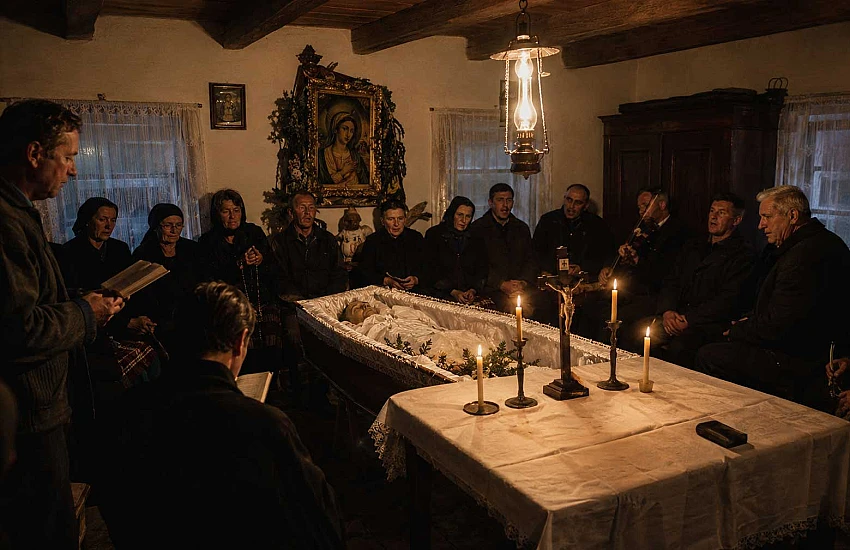
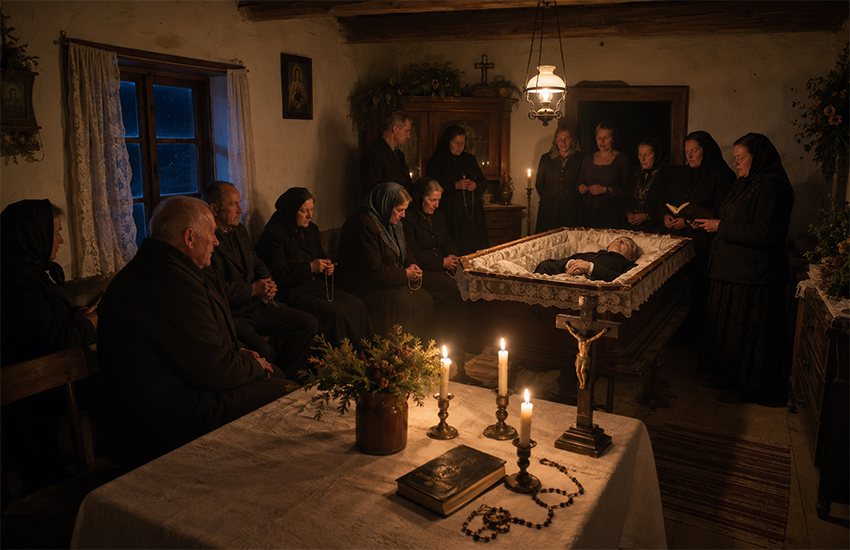
Only a few decades ago, the death of a villager meant that a light would burn through the night in his home. A white cloth was laid over the table, a crucifix and candles were set out, and in the room where the open coffin stood, relatives, neighbours and chance mourners gathered. It began with the rosary, and then – hour after hour, until daybreak – came the singing. Funeral songs, some running to dozens of verses, carried through the darkness of the night before the burial.
The custom of watching over the dead is not unique to any one country. The English-speaking world knew its own forms of it – the Irish wake, the northern English lyke-wake whose very name means corpse-watch, the practice of sitting up with the dead in rural and Appalachian America. In Poland the custom took a distinctive shape, rich in song – the home vigil, sometimes called the funeral vigil, kept beside the body on the night before the burial. Today that image belongs almost entirely to the past. It is worth looking at it not merely as folklore but as evidence of a particular way of meeting death – and understanding why it has nearly vanished. Behind that change lies something seemingly technical: a shift in where the body waits for the funeral. Moving it from the family home to the refrigerated facilities of a funeral home turned out to be one of the forces that most profoundly reshaped the farewell.
What the home vigil was
At its simplest, the home vigil was a folk custom of keeping prayerful watch over the body of the deceased on the night before the funeral, with communal singing of funeral songs at its core. It was not a rite led by clergy – on the contrary, it belonged to the sphere of folk piety and domestic liturgy, animated by lay people. The priest appeared only the following day, at the removal of the body and the Mass. The night before the funeral belonged to the community: to the family, the neighbours and the local singers who gathered around the coffin to lead the deceased, through prayer and song, across the last hours of presence among the living.
The vigil followed a fairly fixed course. It opened with the rosary and prayers for the deceased, followed by the proper sung part, which often lasted until first light. In its full, older form the vigil was not confined to a single night – the rite was repeated across the nights separating death from burial, and the last of them was experienced most intensely. In time this cycle was shortened to one night, and today, where the custom survives at all, it may be reduced to a few hours of singing immediately before the burial. That change alone says a great deal about how sharply the time a community is willing to devote to the deceased has contracted.
What the vigil meant to those who kept it
For the communities that kept it, the vigil carried a weight of meaning that went well beyond the practical. At its centre stood the emptiness left by a death – the sudden tear in the household and the village, the void where a familiar presence had been. It was also a night of quiet, of stillness settling over a house given over to prayer, and at the same time a night of waiting – an expectation of what was yet to come, much as the vigil at Christ's tomb precedes the morning of the resurrection. These threads of loss, stillness and hope ran through the whole custom and gave it its distinctive character.
Roots of the custom – from Slavic lament to sacred song
Keeping watch over the dead is one of the oldest human gestures in the face of death, and it reaches far deeper than Christianity. On Polish soil its roots lie in pre-Christian Slavic ritual, in which death was mourned publicly, at times with the participation of professional weeping women, and grief was accompanied by lament and loud wailing. With Christianisation, this archaic way of bidding farewell gradually gave way to a new form: in place of public lamentation came prayer for the souls of the dead, hymns and sacred funeral songs. The exact date of this change cannot be pinpointed – it was an evolution spread over centuries, in which the old and the new long coexisted.
The most thoroughly documented variant of the rite survived in Kashubia, in northern Poland, where field research was carried out in the 1990s by Father Jan Perszon. His findings suggest that the sung funeral vigil in a form close to today's took shape probably in the eighteenth or early nineteenth century, although the custom of nocturnal vigil itself is far older. The vigil was therefore not so much a relic of the distant past as a living, continually reworked practice that joined the ancient instinct to keep watch with the Christian hope of eternal life and a rich repertoire developed over generations.
Why the soul needed company
At the heart of the rite lay the conviction that, until the funeral, the deceased had not yet departed for good. In folk belief the soul was thought to linger near the home and the body, as if on the border between two worlds, and it was precisely then that it most needed support. To leave it alone, without prayer and song, was regarded as a kind of abandonment – a failing towards someone setting out on a journey who should not go alone. The vigil therefore had a dimension of care: the monotonous singing of the night songs accompanied the soul in its passage towards eternity and was at the same time a plea for the deceased to be received favourably into heaven. The religious meaning was interwoven with a deeply human need not to leave a loved one alone in the hour when they could no longer care for themselves.
The home vigil, step by step
Preparations began with signs visible to the whole neighbourhood. The house in which the deceased lay signalled mourning to the outside world, and within, the space was transformed into a place of prayer. The tables were covered with a white cloth – an unambiguous message, to those who understood, that a vigil would be held that night. A crucifix was set out and candles lit, and the central point of the room remained the coffin, most often open, so that mourners could see the face of the deceased and take their leave directly. It was precisely the presence of the body in the home, within sight and reach, that gave the whole vigil its singular, tangible character.
After dusk the participants arrived, usually in large numbers, first for the rosary; litanies and prayers for the deceased were also said. After the shared prayer, some of those present – women with small children, the elderly and the infirm – returned home, while those who stayed took their places around the tables to sing. And here the vigil proper began: hours of song interspersed with brief prayers, stretching on until dawn. The singing could be loud and powerful, led so as to endure many hours. During the breaks, coffee, cake and sandwiches prepared by the household appeared on the tables, for the vigil was also a form of hospitality – declining the refreshments, or leaving early, was considered a slight to the deceased and the family.
Observers today often ask where people found the strength to keep at it through an entire night. The explanation that speaks most readily to the modern mind points to the very nature of the singing: its repetition and monotony brought relief. The rhythm of successive verses, familiar melodies and ever-returning prayer formulas had a calming effect, allowing the presence of death to be tamed and the hardest hours to be passed in company rather than in solitude. With the dawn the vigil did not break off abruptly: it stretched on into the next day, since it was not done to leave without a farewell, and only then came the time for the removal of the body and the funeral ceremony proper.
The role of the singer – guide through the night of mourning
The vigil could not take place without a leader. The singing was led by a chosen singer – in Kashubia called the śpiewok – whom the family had usually asked in advance. It was a role that carried great authority; it was most often filled by devout men, known in the community for their upright lives and strong voices. The singer intoned each song, announced it by name, set the melodies of his own region and dictated the pace of the whole night, and the rest had to fall in behind him. Often it was an occupation passed down – a son took it over from his father or grandfather, learning the repertoire and the manner of leading over years of singing together.
In some traditions the singer was also a kind of intermediary between the deceased and the living – seen as the one who conveyed the departed's last words to the family, with the songs helping both sides take their leave. In this way the guide of the vigil became something more than a song leader: he was the person who, with his own voice, closed the relationship severed by death and gave grief an intelligible, ordered shape.
The night songs – repertoire of the last vigil
The repertoire of the vigil was extensive and varied. During a single vigil some thirty songs might be performed, each announced beforehand so that all those gathered could join in. Some pieces derived from old church songs reaching back to the sixteenth, seventeenth and eighteenth centuries, while others were distinctly folk in character. Among them were songs of prayer for the soul of the deceased, songs of farewell, pleas for admission into heaven addressed to God, Christ, the Mother of God and the angels, and songs of warning, directed at the living and recalling the fragility of earthly life. Many had a dozen or even several dozen verses – one of the best known runs to fifty-six.
The source of these songs was the cantional and the songbook, and in folk circulation also collections copied by hand into thick notebooks. In Pomerania particular importance attached to the songbook published in 1871 in Pelplin by Father Szczepan Keller, with separate sections devoted to songs for the souls of the dead and to funeral songs. They were performed responsorially, in alternation, which reinforced the impression of a communal dialogue drawn out across the night. Though the texts could be austere, and at times literal in their description of mortality, they were suffused with Christian hope, so that the vigil was not merely a lament but also a profession of faith in eternal life.
A communal function – why the village needed the vigil
The home vigil had an obvious religious meaning, but its social significance was no less important. For the old village community, taking part in the vigil and the funeral was a moral obligation, almost unconditionally required. The inhabitants knew well who had appeared at the vigil and who had not – presence was proof of solidarity and belonging, and absence could become a source of speculation and gossip. In this way the rite continually renewed the bonds within the community and reminded everyone that the death of one of its members touched all, not only the closest family.
The vigil also performed a very practical function for the bereaved. A family that had just lost a loved one was not left alone – people gathered around it, the house filled with voices, and the weight of the first, hardest nights was distributed across the whole community. The conviction, repeated across generations, that one who sings prays twice captured the spirit of the custom: active participation, rather than passive endurance, was the way through loss. The vigil also offered a chance to take leave to those who could not be present at the funeral itself – a personal, direct parting beside the open coffin that the formal ceremony did not always allow. All of these functions – religious, integrative and therapeutic – came together into a single whole, making of the home vigil an institution that the community genuinely needed.
Vigil as shared mourning
From today's perspective, the home vigil is most easily appreciated as a wise mechanism for coping with grief. Contemporary psychology stresses that loss requires time, ritual and the presence of others, and that a premature coming to terms with death is often illusory. The old rite supplied all of this almost as a matter of course: it set aside a definite time for mourning, surrounded the bereaved with community, and allowed the repetitive singing gradually to tame what cannot quite be grasped. It is no accident that some of today's keepers of this tradition are people who work professionally in accompanying the dying and the bereaved – they recognise in it an intuitively crafted therapy for loss that modern, individualised farewells often lack.
Where the vigil survived – Kashubia, Kurpie, Podlasie and the Lublin region
The custom of the nocturnal sung vigil was once widespread across rural areas in many parts of the country, and as recently as the 1980s it could be encountered in various regions of Poland. In time, however, it retreated from most of them, retaining its vitality only where local culture proved especially resilient. The vigil took its firmest hold in Kashubia and in the Kurpie Green Forest, where it is still practised to this day, particularly in the villages and among the oldest inhabitants. It is to these regions that we owe the fullest documentation of the rite and the richest surviving repertoire of songs.
The tradition of singing over the dead also survived in the east of the country – in Podlasie and the Lublin region, where funeral songs and the figure of the funeral singer remain present in local memory and practice. It is from these parts that many of the performers come who have carried this repertoire onto the stage, including a folk requiem built on old funeral songs and singing initiatives that have won recognition at festivals of traditional music. This revival of interest is itself a telling sign: it shows that, with the disappearance of the rite, the community has felt a certain absence that it is now trying to name and to fill.
Why the vigil almost disappeared
There were many reasons for the decline of the home vigil, and they overlapped over decades. The most obvious was the demographic and social transformation of the Polish countryside: the depopulation of smaller localities, migration to the cities and the loosening of old neighbourly ties meant that it became ever harder to gather a body of people willing to spend a whole night in prayer and song. Where the community had broken up or scattered, a rite that by its nature required a collective simply lost the ground beneath it.
A second group of causes is bound up with changes in custom and in transmission between generations. Secularisation, a different rhythm of life and the fact that younger generations increasingly avoid gatherings of this kind meant that the circle of participants shrank to the oldest inhabitants. The repertoire of night songs, difficult and extensive, handed down until then from mouth to mouth and from notebook to notebook, ceased to be widely known. In parallel came the professionalisation of the funeral – more and more of the tasks surrounding death were taken over by specialised funeral homes, and the family, from being the chief organiser of the rite, became its participant. All of these processes, however, were preceded or reinforced by one more concrete change, which cut at the very foundation of the vigil.
Moving the body from the home to funeral-home refrigeration
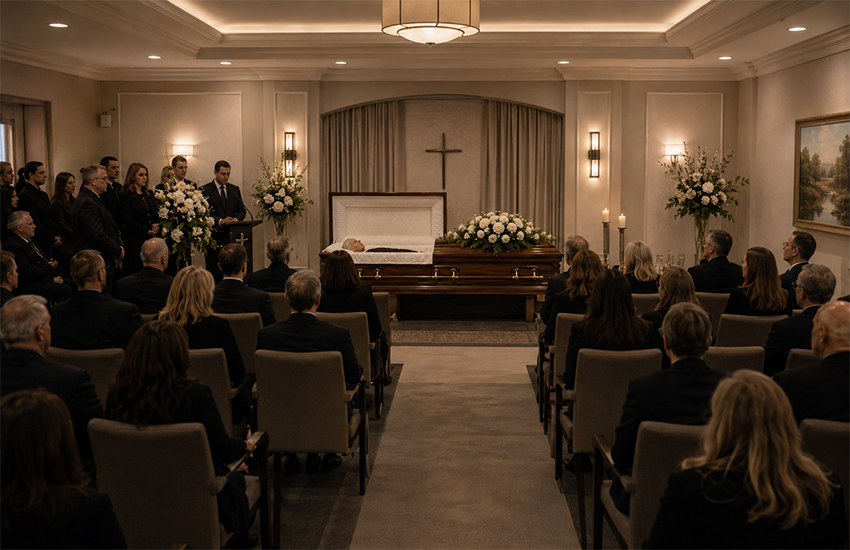
The home vigil was a rite closely bound to place. Its natural centre was the room in which the open coffin stood with the body – it was around this that the mourners gathered, and its presence that ordered the entire night. As long as the deceased remained at home, the vigil took place almost of itself: since the body was there, one had to keep watch beside it. But once the body ceased to return home and began to rest in the funeral home's refrigeration until the day of burial, the physical point around which the rite could form disappeared. There was no keeping watch through the night beside a coffin that was not in the house.
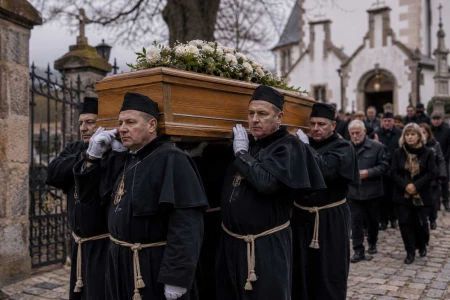
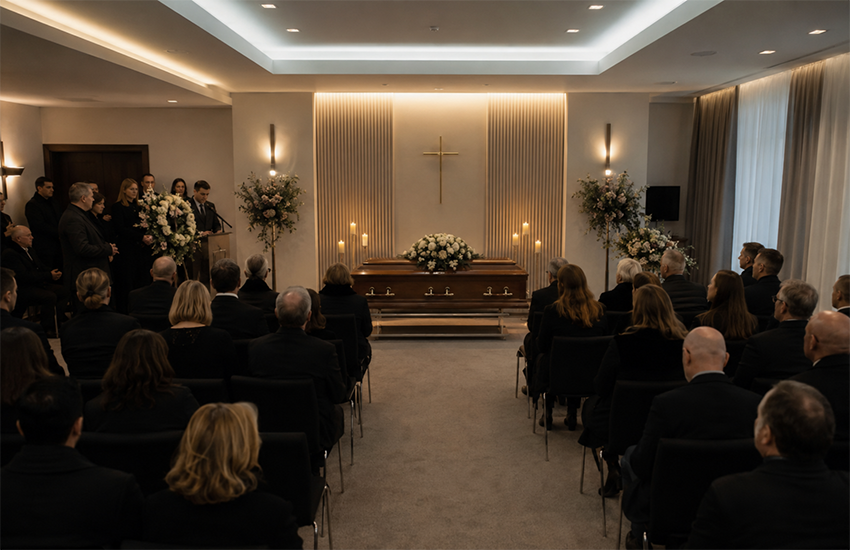
It was precisely this change of place that proved decisive. The other factors – depopulation, secularisation, haste – created an unfavourable climate, but it was the removal of the body from the home that took away the very material basis of the vigil. The farewell moved to the chapel and the funeral home, contracted into the formal ceremony, and from a multi-hour domestic vigil turned into a short visit beside the displayed coffin. To understand why the body left the home, one has to look at the changes in custom and at the regulations that shaped this new order.
Law, hygiene and a new way of keeping the body
The movement of the body from the home to the funeral home was not the result of a single decision but of a convergence of rising sanitary requirements, changing family expectations and the legal framework governing the handling of the deceased. This pattern is not specifically Polish – across much of Europe and the English-speaking world the home wake gave way through the twentieth century to professionally equipped facilities. In the United Kingdom, for instance, there is no strict statutory limit on keeping a body at home, yet refrigerated storage in a funeral home's chapel of rest became standard practice, and Health and Safety Executive guidance on managing infection risks when handling the deceased reflects the same underlying logic of controlled, hygienic conditions.
In Poland the framework is more explicit. The foundation remains the Act of 31 January 1959 on Cemeteries and Burial of the Dead, under which the body should be removed from the dwelling no later than seventy-two hours after death, with exceptions possible only where the body has been suitably preserved and the competent sanitary inspector has given consent. This time limit alone means that the traditional practice of keeping the body at home for several days before the funeral no longer fits within the binding rules. The detailed conditions of storage are set out in the Regulation of the Minister of Health of 23 March 2011 on the manner of storing corpses and remains. It provides, among other things, that a body placed in a pre-funeral home should be kept at a temperature no higher than ten degrees Celsius; that without such a temperature the storage period may not exceed twenty-four hours, extending to seventy-two hours under refrigerated conditions; and that a room intended for preparing the body for burial should maintain a constant temperature no higher than four degrees Celsius. The regulations did not ban the vigil outright, but they made the domestic display of the body practically unworkable and shifted the burden of storage onto professionally equipped facilities. In this way hygiene and law completed what social change had begun – and the new, natural place of waiting for the funeral became the funeral home and its refrigeration.
The cooling catafalque – where the body now rests before farewell
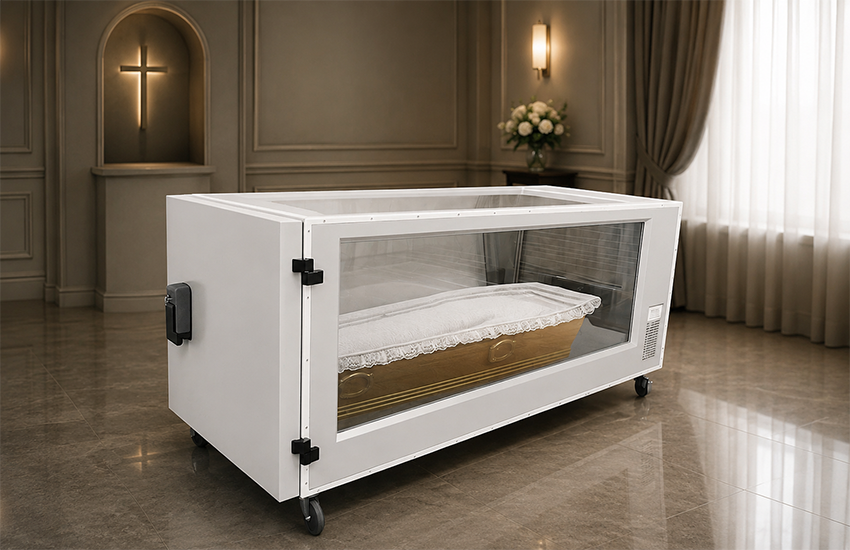
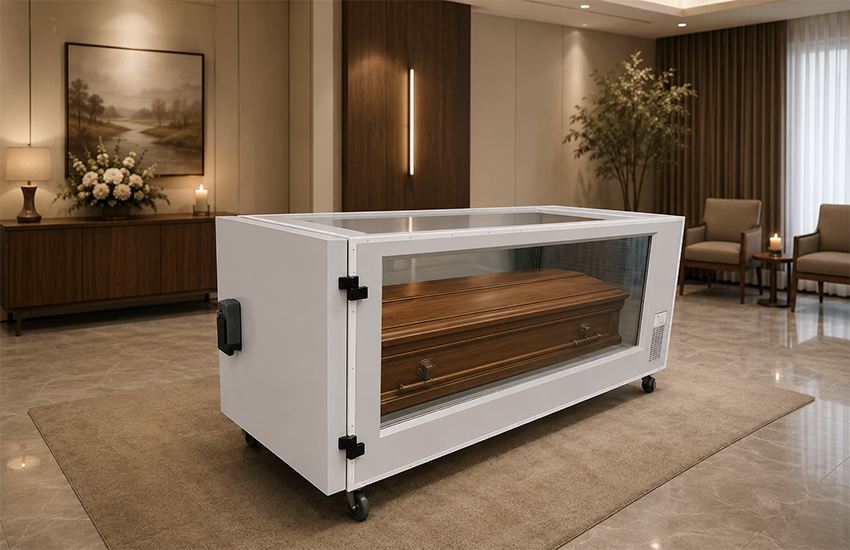
Since the body no longer returns home, it is the equipment of the funeral home that determines the conditions in which the deceased awaits the farewell and whether loved ones can see them in a dignified setting. A solution that combines refrigerated storage with the possibility of presenting the body is the cooling catafalque for one body. This compact device with a glass upper section allows for an aesthetic and respectful presentation of the deceased while preserving discretion in the lower, technical part. In a sense it takes over the role of the old room with its open coffin – recreating, within the funeral home, the very possibility the home once offered: to look upon the face of a loved one and to take one's leave face to face.
The technical parameters of the catafalque correspond directly to the requirements of the regulations. The standard operating temperature range runs from zero to ten degrees Celsius – precisely the maximum the regulation permits for storing a body in a pre-funeral home; optionally, for an additional charge, this range can be extended to minus three or minus five degrees, increasing flexibility where the wait for the funeral is longer. The unit is powered from a standard two-hundred-and-thirty-volt supply, and its construction – with a stainless steel interior and a casing of lacquered galvanized sheet metal – is durable and easy to keep clean, which is of no small importance given the hygienic rigour involved. An air cooler in the upper section ensures even distribution of the cold, a refrigeration unit in the lower part guarantees stable operation, and the whole, measuring two hundred and sixty by ninety by one hundred and one centimetres, fits even into smaller rooms. The manufacturer covers the catafalque with a twenty-four-month warranty and the refrigeration system with a twelve-month warranty.
The daily work of staff is eased by features that improve comfort and safety. The chamber is fitted with sturdy castors with brakes, so that the unit can be moved freely and set securely in place, while a primary and an auxiliary cart make loading and unloading the body easier. The chamber door closes with a snap lock that can be opened from the inside, an important safeguard. The functionality can be further extended with accessories – an acid-resistant steel tray that raises hygiene standards, and a hydraulic trolley with a foot pump, which significantly eases the moving of bodies. For establishments with greater needs, the natural complement to the range is refrigerated storage of larger capacity: a mortuary fridge for two bodies, a mortuary fridge for three bodies, and a refrigerated catafalque with a glass top that combines storage with presentation. The full selection can be found in the mortuary refrigerators category.
The aesthetics of farewell in the funeral home
What at first glance is a purely technical solution in fact answers a very old need – a dignified farewell in a setting that honours the deceased and their loved ones. The glass upper section allows the visual presence of the deceased to be preserved, something the old rite took for granted and that today, with the body no longer in the home, requires a separate, considered solution. For establishments and chapels that value a classic appearance, a version with an elegant wooden enclosure is available, one that sits better with a traditional interior and softens the technical character of the device. In this sense the modern funeral home, equipped with a cooling catafalque, seeks to recreate a certain function of the old room – a place in which the farewell keeps its gravity and intimacy, even though it now takes place beyond the family home.
What we lose, and what we gain
The disappearance of the home vigil does not lend itself to simple judgements. Without doubt we lose something irretrievably: the long shared vigil, the rich repertoire of songs, the distribution of grief's weight across the whole community, and that singular, tangible kind of presence beside the deceased that the open coffin in the domestic room once provided.
At the same time the new order has brought real benefits. Professional storage of the body in appropriate conditions is more hygienic and safer, lifts part of an overwhelming burden from the family in the hardest days, and allows the farewell to be organised in a way that is predictable and compliant with the binding rules. The reviving interest in the tradition shows that the point is not a simple turning back of time, but a conscious rescue of what was most valuable in the old rite. Perhaps the most sensible attitude is one of memory: an understanding of what the vigil was and what function it served, so that contemporary farewells – including those organised in funeral homes – are able to preserve their essence, which is dignity, community and the time that grief requires.
Frequently asked questions (FAQ)
What exactly was the home vigil?
The home vigil, sometimes called the funeral vigil, was a folk custom of keeping prayerful watch over the body of the deceased on the night before the funeral, whose most important element was the communal singing of funeral songs. The rite was a domestic liturgy led by lay people – it opened with the rosary and prayers and then passed into many hours of singing, often lasting until dawn. In its full, older form the vigil was kept over the several nights separating death from burial, most intensely on the last of them.
Why was the vigil kept through the whole night?
In folk belief the soul was thought to linger near the home and the body until the funeral, and it was precisely then that it most needed support; to leave the deceased alone was seen as a kind of abandonment. The long night of prayer and song was a way of keeping the deceased company on the journey ahead. In practical terms, the repetition and monotony of the singing also brought relief, helping mourners pass the hardest hours in company rather than in solitude.
Who led the singing during the vigil?
The vigil was led by a chosen singer, in Kashubia called the śpiewok, whom the family had usually asked in advance. The role was most often filled by devout men who enjoyed authority in the community and were gifted with strong voices. The singer intoned each song, set the melodies of his own region and led the whole night. The role was often inherited from one generation to the next, and the singer was sometimes seen as an intermediary conveying the symbolic last words of the deceased to the family.
In which regions of Poland did the vigil survive?
The custom was once known across rural areas in many parts of the country, but it survived longest and most fully in Kashubia and in the Kurpie Green Forest, where it is still practised today, especially among the oldest inhabitants. The tradition of singing over the dead also endured in Podlasie and the Lublin region, from which many contemporary performers of funeral songs come.
Why are the bodies of the deceased no longer kept at home?
Several factors combined: the social transformation of the Polish countryside, rising hygiene requirements, and the legal framework. Under the Act of 31 January 1959 on Cemeteries and Burial of the Dead the body should be removed from the dwelling no later than seventy-two hours after death, and the Regulation of the Minister of Health of 23 March 2011 sets out in detail the conditions for storing it. In practice these rules made the display of the body at home for several days unworkable. A comparable shift took place across much of Europe and the English-speaking world.
What temperature must a cooling catafalque maintain in a funeral home?
Under the binding regulations, a body placed in a pre-funeral home should be kept at a temperature no higher than ten degrees Celsius, and a room for preparing the body for burial should maintain a constant temperature no higher than four degrees Celsius. The cooling catafalque for one body operates as standard from zero to ten degrees, matching the storage requirement, and this range can optionally be extended to minus three or minus five degrees Celsius.
Can the vigil take place when the body is in a funeral home?
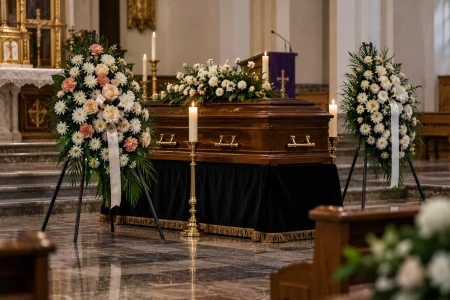
Although the classic funeral vigil was inseparably bound to the home of the deceased, the idea of a vigil and song does not strictly require a domestic room. Today the prayerful sung vigil increasingly takes place in chapels and funeral homes, beside a coffin displayed on a catafalque, sometimes with ready-made songbooks for the participants. In this form the tradition continues under new conditions – shorter and removed from the home, yet retaining its core: the communal farewell through prayer and song.