Table of Contents
- Military Funeral with Honorary Guard Ceremony
- Funeral Ceremony at Sea – Regulations and Maritime Traditions
- State Funeral – Highest Honors for the Distinguished
- Uniformed Services Funerals – Police and Firefighter Ceremonial
- Ecological Funerals – Modern Alternative in Harmony with Nature
- Religious Funerals – Traditions of Different Cultures and Religions
- Professional Funeral Home Equipment for Special Ceremonies
- Secular Funeral – Ceremony Without Religious Elements
- History and Evolution of Funeral Ceremonies
- Development of the funeral industry
- Frequently Asked Questions (FAQ)
- Summary
Funeral ceremonies represent one of the most important rituals in every society. While most of us are familiar with traditional Catholic or secular funerals, there exist many special forms of bidding farewell to the deceased that stand out through their unique ceremonial elements, symbolism, and the circumstances under which they are conducted. From solemn military funerals with honorary guards, through mysterious burials at sea regulated by maritime law, to modern ecological funerals in memorial forests – each of these forms reflects deeply rooted cultural, religious, or professional traditions.
Professional funeral homes that wish to offer comprehensive services at the highest level must have appropriate funeral equipment adapted to various types of ceremonies. Regardless of the nature of the ceremony, the quality of funeral accessories that ensure a dignified setting for the final farewell is of key importance. In this article, we will present a detailed overview of special types of funerals, their ceremonial aspects, and requirements for professional funeral home equipment.
Military Funeral with Honorary Guard Ceremony
Military funerals belong to the most solemn and dignified forms of bidding farewell to the deceased. The military ceremonial, regulated by detailed regulations and decrees issued by defense ministries, defines specific rules for organizing this type of funeral ceremony. The military honorary guard represents a form of exceptional honoring by the Armed Forces of the deceased person, and the entitlement to its participation stems directly from the provisions of Military Ceremonial regulations.
Who is entitled to a funeral with military honorary guard?
Military honorary guard is provided during funeral ceremonies for a wide range of individuals connected with military service. This right extends to soldiers in active service and former professional soldiers who devoted their lives to serving their country for many years. Furthermore, military ceremonial is applied during funerals of recipients of the highest military decorations and orders, representing the most distinguished military honors.
Veterans and combatants, participants in fights for freedom and independence, can also count on this honorable form of farewell. This also applies to veterans of military missions abroad who provided assistance in the most difficult corners of the world. Particularly distinguished military employees, upon request from the military unit commander, may also be bid farewell with military ceremonial honors.
Elements of military honorary guard
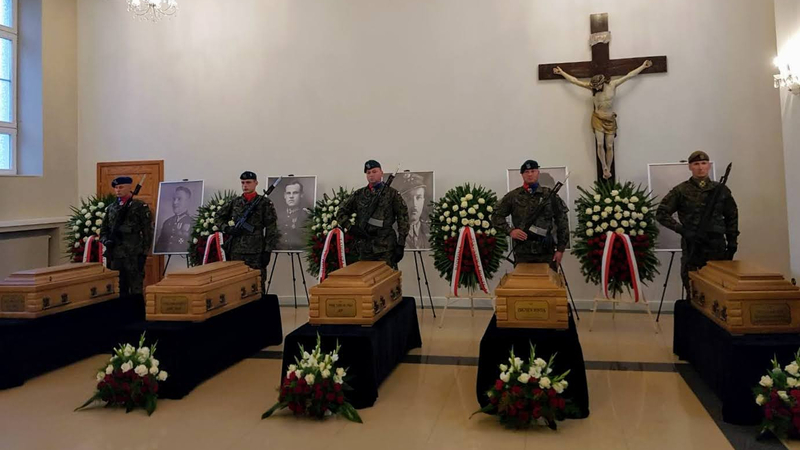
Military honorary guard during funeral ceremonies can take various forms depending on the rank of the deceased and the decision of appropriate military authorities. The honor company with or without standard bearers constitutes the main ceremonial element, giving the ceremony appropriate rank and solemn character. Soldiers assigned to honorary posts at the coffin or urn stand guard, paying tribute to the deceased throughout the entire ceremony.
Among the particularly moving elements are soldiers carrying cushions with the deceased's medals and decorations, who march in order of decoration seniority. The military orchestra along with the trumpeter and drummer provide the musical setting for the ceremony, performing among others the Military Signal during the lowering of the coffin into the grave. The honorary salvo fired by the company constitutes a symbolic military farewell, and its sound resonates throughout the entire cemetery, evoking emotion among those gathered.
Procedure for organizing a military funeral
The decision regarding the participation of military honorary guard in funeral ceremonies of members of the highest state authorities and other persons particularly distinguished for the state is made by the Minister of Defense, taking into account the nature of the deceased's merits. In other cases, the decision is made by the garrison commander appropriate for the place where the ceremony is held. The request for participation of military honorary guard along with required documentation should be submitted well in advance to ensure proper organization of the ceremony.
The coffin or urn during a military funeral is displayed on a catafalque in a special manner. On the coffin, a headcover with visible military rank is placed, and in front of it are arranged the orders and decorations received by the soldier during their service. In the case of funerals for recipients of the highest military orders and persons particularly distinguished for the state, the coffin or urn is decorated with the national flag.
Funeral Ceremony at Sea – Regulations and Maritime Traditions
Sea burial belongs to the oldest funeral rituals in human history, dating back to ancient maritime civilizations. This unique type of burial has been practiced for centuries by sailors and all those connected with the sea who wished to rest in the salty depths of the ocean. Contemporary provisions of national and international law strictly regulate the conditions and circumstances under which this type of ceremony can be conducted, making burial at sea an event of exceptional character.
Legal regulations regarding sea burial
According to international maritime law and national regulations concerning cemeteries and burial of the deceased, sea burial can only take place under strictly defined circumstances. The basic condition is the death of a person on a vessel on the high seas, when the unit has no possibility of reaching port within 24 hours. Regulations clearly indicate that arrival at port does not include the necessity of changing course – this time concerns reaching a port included in the voyage program.
Different rules apply to military vessels. In their case, the decision regarding the possibility of conducting sea burial is made by the ship's captain, taking into account sanitary and strategic considerations. If for military reasons reaching port is inadvisable, even when the vessel is not very far from shore, the captain may decide on burial at sea. Tragic cases of unavoidable sea burials are maritime disasters, such as ship sinking, when the bodies of the crew rest on the bottom along with the wreck.
Ceremonial and maritime customs during burial
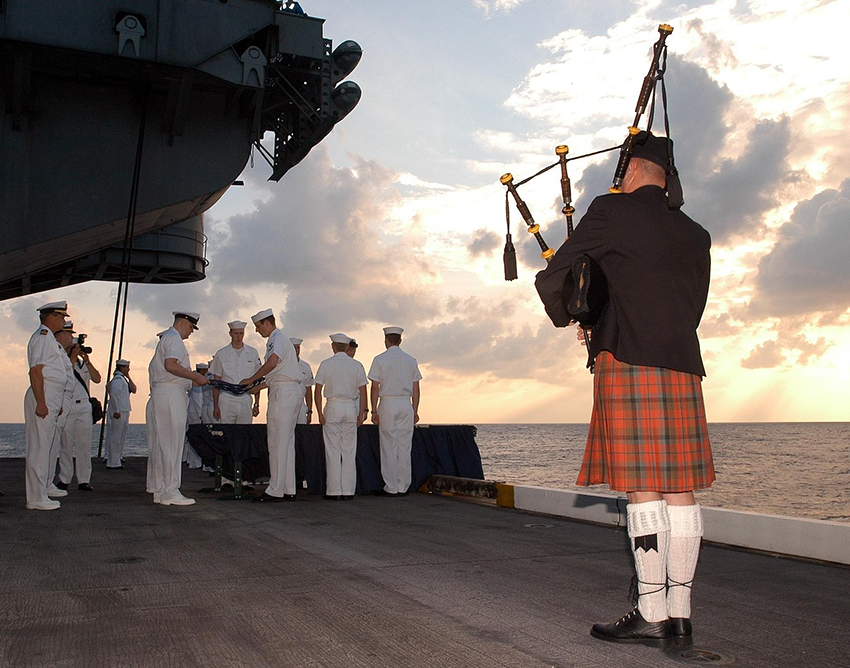
The funeral ceremony at sea is conducted according to maritime customs that have developed over centuries among seafaring communities. In later centuries, sea burial involved throwing the body of the deceased into the water in a canvas bag weighted with stones or cannonballs. Currently, the ashes of the deceased are most often scattered or a biodegradable urn is sunk, which decomposes in the marine environment.
According to maritime ceremonial, the coffin or body of the deceased must be appropriately weighted with additional weight, such as sand or concrete, so that the remains sink quickly and permanently. After the ceremony, the yacht or ship circles the burial site three times with the ship's siren sounding. Natural flowers and wreaths are thrown into the water, with plastic or artificial elements prohibited due to marine environmental protection. A symbolic flag dip and three long and one short sound signal constitute the traditional farewell.
Examples of historical sea burials
Among the most moving examples of sea burials in history are the ceremonies honoring legendary naval commanders and sailors who wished to rest in the waters they served throughout their lives. These ceremonies combine the solemnity of state funerals with unique maritime traditions, creating unforgettable moments that pay tribute to those who gave their lives to the sea. Tragic examples include maritime disasters where entire crews found their eternal rest at the bottom of the ocean, with symbolic funerals held on shore.
State Funeral – Highest Honors for the Distinguished
State funerals represent the highest form of honoring a deceased person by state authorities. This exceptional ceremony is organized by the state at the expense of the Treasury and is granted to individuals who have particularly distinguished themselves for their country. The decision to conduct a state funeral is made by the head of government, taking into account the nature of the deceased's merits and the will of the family, which always remains paramount.
Who is entitled to a state funeral?
According to applicable regulations, state funerals are primarily granted to Presidents, Speakers of Parliament, and other high-ranking individuals holding important public functions. Additionally, state authorities may decide to conduct such a ceremony for particularly distinguished individuals, including outstanding scientists, artists, athletes, soldiers, police officers, or important officials. The will of the deceased and their family, however, always remains the most important deciding factor.
State funerals are also organized for individuals possessing a significant number of state decorations and for those who gave their lives in service to their country. These ceremonies are characterized by exceptional setting and the participation of the highest state authorities, diplomats, and representatives of various social circles.
Elements of state ceremonial
State funerals combine elements of military ceremonial with official state setting. Among the noticeable differences compared to a regular military funeral is the transport of the coffin on a gun carriage, which constitutes a special honor reserved for the most important persons in the state. The artillery salute, consisting of 21 volleys for a president, represents traditional honoring according to international protocol dating back to the Austro-Hungarian times.
The ceremony usually begins with a funeral mass, which may be presided over by a high church dignitary. On the coffins of particularly distinguished persons, recipients of the highest military orders, or members of the highest authorities, the national flag is placed. On a coffin decorated in this way, neither edged weapons nor flowers are placed, nor is earth sprinkled on it – these elements of the ceremony follow only after the flag is folded.
Uniformed Services Funerals – Police and Firefighter Ceremonial
Uniformed services have their own funeral ceremonials that pay tribute to officers who fell in the line of duty or distinguished themselves in their formation. Both the Police and Fire Service have detailed regulations governing the organization of funeral ceremonies with honorary guard, which give them a unique and solemn character.
Police funeral with honorary guard
The Police Ceremonial defines the rules for organizing funerals with police honorary guard. The guard is provided during funerals of police officers who died protecting human life and health and property, as well as protecting public safety and order. The ceremonial also covers funerals of general inspectors and senior inspectors of police as well as police officers and Police employees in retirement.
The police honorary guard during the ceremony consists of an honor company, standard bearers, trumpeter, and police orchestra. The coffin of a police officer who died abroad is decorated with a flag with an eagle. During the lowering of the coffin or urn into the grave, the company renders honors, and then the company commander issues commands for an honorary volley. The only case in which the guard is not provided is the funeral of an officer who died by suicide.
Firefighter funeral – fire service ceremonial
The Fire Service Ceremonial defines the rules for organizing funerals with honorary guard for firefighters. The guard is provided during funeral ceremonies of officers who died during rescue operations, in connection with these operations, during exercises and training in service time, and while saving human life and property while off duty.
A particularly moving element of a firefighter's funeral is the Last Alarm ceremony. It involves striking the fire bell three times, symbolizing the end of the fallen firefighter's service. Then a radio message is read informing about the firefighter's death and the end of their service. A traditional element is also the presentation of the flag to the deceased's family – the flag that covered the coffin is carefully folded into a triangle and presented to the next of kin as a symbol of gratitude for their service.
Ecological Funerals – Modern Alternative in Harmony with Nature
Ecological funerals, also called green burials, represent a dynamically developing form of bidding farewell to the deceased that is gaining increasing popularity worldwide. This innovative type of funeral ceremony is based on the principle of minimal impact on the natural environment and harmony with nature's life cycle. The global green burial market is estimated to exceed one billion dollars by 2030, which demonstrates growing interest in this form of farewell.
Memorial Forests and ecological burial plots
Memorial Forests have been opening in various countries around the world, offering a natural alternative to traditional cemeteries. In designated forest areas, remains are placed in biodegradable urns within natural forest settings, without traditional headstones and monuments. Families may only place small information plaques at stones marking the plot boundaries, maintaining the natural character of the space.
Ecological burial plots called Trees of Memory have been established in various locations, designed with sustainable development and environmental protection in mind. They are surrounded by hedges of natural shrubs, have entrances through wooden gates with tree of life motifs, and the ground is covered with sedum mats that absorb rainwater and support the local ecosystem. These innovations represent the growing trend toward environmentally conscious funeral practices.
Principles of ecological burial
Ecological burial means much more than just choosing a coffin or urn made of natural materials. At the body preparation stage, embalming or chemical agents are not used, nor is post-mortem makeup applied. The body is dressed in clothing made of natural, raw materials – cotton or linen, fastened with wooden buttons or ties. It may also be wrapped in a shroud made of natural materials.
Coffins and urns used during ecological burials are made of biodegradable materials such as raw wood, bark, moss, wicker, paper pulp, or composite based on wood dust. Coffins are devoid of metal elements and linings made of synthetic materials. Families may additionally purchase a biodegradable reliquary with a tree seedling that can be planted in a chosen location as a symbol of memory and new life.
Religious Funerals – Traditions of Different Cultures and Religions
As multicultural and multi-faith societies, modern countries are places where funeral ceremonies are organized according to the traditions of various religions and cultures. Professional funeral homes increasingly offer comprehensive service for religious funerals, adapting their services to the specific requirements of individual rites. Knowledge of these traditions and having appropriate funeral equipment represents respect for cultural diversity.
Jewish funeral according to Judaic tradition
The funeral ceremony in Jewish culture is governed by strictly defined rules dating back thousands of years. After death, the body is handled exclusively by a specialized group of people called Chevra Kadisha, who perform ritual purification. The deceased is dressed in a white garment called tachrichim, devoid of any ornaments – a garment of the cheapest white linen, emphasizing the equality of all people in the face of death.
A Jewish funeral should take place as soon as possible, preferably within a day of death. The ceremony is relatively short and involves the passage of a procession with mourners, during which every Jewish bystander is obligated to join for at least a moment. Mourners sing psalms, and the son of the deceased recites the Kaddish prayer. The grave should be earthen only, never concreted, and only stones are placed at the burial site as an expression of memory.
Muslim funeral in Islamic rite
In Islamic culture, the funeral should take place as soon as possible after death, preferably within a day. The body of the deceased is subjected to ritual washing by persons of the same gender, with the exception of the spouse. It is then wrapped in a white shroud without any ornaments, according to the principle of simplicity and humility before God. Islam prohibits cremation, so the body is always buried in the ground.
According to Muslim tradition, the body is placed in the grave on its right side, facing Mecca. The grave is made with a niche in which the body is placed, and the sides are reinforced with bricks or stones. Muslim graves should be flat or only slightly protrude above the ground, without elaborate monuments and headstones. Only a plaque with the deceased person's name is permissible.
Buddhist and Hindu funerals
In Buddhism, there is no single universal method of burial, as Buddhist tradition adapted funeral customs used in the particular countries to which Buddha's teachings came. For Buddhists, what is most important is what will happen to the spirit after death, which will experience the consequences of deeds committed during life. The most commonly practiced forms are cremation or burial in the ground, with religious ceremonies performed for the first seven weeks after death.
Hindu culture traditionally practices cremation of bodies. According to Hindu beliefs, cremation represents liberation for the soul, which can embark on its journey of reincarnation without any obstacles. The funeral ceremony lasts ten days and includes ritual bathing, recitation of mantras, and making offerings at the family altar. The ashes of the deceased are traditionally thrown into sacred rivers, which ensures better rebirth in the next life.
Professional Funeral Home Equipment for Special Ceremonies
Organizing special types of funerals requires funeral homes to have appropriate, professional funeral equipment. Regardless of the nature of the ceremony – military, maritime, ecological, or religious – the quality of funeral accessories that ensure a dignified setting for the final farewell and smooth conduct of the ceremony is of key importance.
Urn carriers and stands – elegance and functionality
Professional funeral homes seeking the highest quality funeral accessories will appreciate exclusive sets for transporting and displaying funeral urns. An excellent example of such a solution is the urn stand and carrier set available at funeraryaccessories.com, which combines elegance with practical use. The upholstered carrier features a solid construction covered with high-quality fabric available in various color options, enabling aesthetic matching to the character of any funeral ceremony.
Richly decorated handles not only enhance the aesthetic value of the set but also facilitate safe and dignified carrying of the urn in a professional manner. The large, stable stand measuring 100x53 cm guarantees comfortable urn placement and ensures its safe display during the funeral ceremony. Luxurious fabric and ergonomic solutions make this set excellent equipment for funeral homes that value elegance and high-quality workmanship.
Catafalques and transport trolleys
Catafalques constitute an essential element of equipment for every funeral chapel and church where funeral ceremonies are held. They serve to dignified display of the coffin with the body of the deceased or the urn with ashes at an appropriate height, ensuring aesthetic and functional placement during the ceremony. Modern catafalques are characterized by durable stainless steel construction, easy folding and storage capability, and elegant finish matching various chapel arrangements.
Transport trolleys, including popular scissor trolleys, enable efficient coffin transport both indoors and outdoors. Equipped with widely spaced wheels, often with adjustable height or foldable, they allow for efficient handling even by one person. Materials used in the production of transport trolleys facilitate their quick disinfection, which is necessary in the daily work of a funeral home.
Funeral tents and wreath stands
Funeral tents constitute extremely important equipment during ceremonies held at cemeteries, protecting participants from adverse weather conditions. Available in various sizes, from intimate 3x3 meters to larger 4x4 meter constructions, they are made of waterproof materials of high durability. Stable construction and quick assembly ensure comfort during any funeral ceremony.
Wreath and flower stands allow for aesthetic arrangement of condolences during the ceremony, both in the chapel and at the cemetery. Barrier posts with velvet rope enable organization of space and directing movement of mourners. Lecterns and notice boards provide professional setting for speeches and information during ceremonies.
Secular Funeral – Ceremony Without Religious Elements
Secular funerals represent an alternative form of farewell for individuals who during their lifetime did not identify with any religion or expressed a wish for burial without religious elements. This form of funeral ceremony is gaining increasing popularity, responding to the needs of societies that are becoming increasingly diverse in terms of worldview. The secular ceremony allows for an individual, personal farewell adapted to the character and wishes of the deceased.
The role of the Master of Funeral Ceremonies
During a secular funeral, the key role is played by the Master of Funeral Ceremonies, who takes over the functions traditionally performed by clergy. This is an experienced and empathetic lay person who ensures the proper conduct of the ceremony and gives it appropriate rank and atmosphere. On the shoulders of the Master of Ceremonies lies the preparation and delivery of the funeral speech, leading the funeral procession, and coordinating all elements of the ceremony.
The Master of Ceremonies works closely with the deceased's family so that the ceremony reflects the life and personality of the departed. During the ceremony, symbolic gestures are performed, and the deceased's favorite music may play from speakers. There is also time for reminiscences delivered by relatives, friends, and colleagues, which gives the ceremony a very personal character. Professional funeral homes employ qualified Masters of Ceremonies or collaborate with individuals specializing in conducting secular ceremonies.
Elements of secular ceremony
The secular ceremony, although devoid of religious elements, maintains a solemn and dignified farewell character. It begins with the display of the body in a funeral home or cemetery chapel, where loved ones can pay their last respects to the deceased. The coffin or urn is placed on a catafalque, decorated with flowers and a photograph of the deceased. The chapel is often decorated according to the family's wishes or the preferences of the deceased.
The funeral speech delivered by the Master of Ceremonies or family members constitutes the central element of the ceremony. The life of the deceased is recalled, their achievements, passions, and values they lived by. After the ceremony in the chapel ends, the funeral procession escorts the coffin or urn to the burial site, where it is placed in the grave or columbarium. The ceremony often ends with laying flowers and offering condolences to the family.
History and Evolution of Funeral Ceremonies
Funeral ceremonies have accompanied humanity since the dawn of time, evolving along with the development of civilization, religion, and culture. From simple burials in the Stone Age, through monumental tombs of ancient Egypt, to contemporary diverse forms of farewell – funeral rituals have always reflected the beliefs, values, and social status of the deceased. Understanding historical roots allows for better appreciation of the significance of contemporary special ceremonies.
Funeral traditions in European culture
European funeral culture has been shaped for centuries under the influence of various traditions, Christian influences, and impacts from other cultures. Traditional European funerals were characterized by multi-day vigils with the deceased, solemn processions through villages or cities, and communal funeral meals during which the life of the deceased was remembered. These elements, although modified, have survived to modern times.
A special tradition was developed by aristocratic and noble funerals, which included multi-day ceremonies with invited guests, panegyric speeches, and lavish processions. This tradition influenced the shaping of later state and military ceremonials. Today, European funerals combine traditional elements with modern forms, adapting to the changing needs of society.
Development of the funeral industry
The funeral industry has undergone significant transformation in recent decades. From small family funeral homes, through professionalization of services, to modern funeral homes offering comprehensive service. The introduction of crematoria opened new burial possibilities, and the development of technology enabled the organization of ceremonies with online streaming for those who cannot attend in person.
Modern funeral homes invest in professional funeral equipment, staff training, and modern forms of commemorating the deceased. Companies like Prima-Tech S.C. supply high-quality funeral accessories that combine tradition with modernity. Growing customer requirements and diversity of burial forms mean that the industry must constantly develop and adapt to changing social needs.
Future of Funeral Ceremonies – Trends and Innovations
The funeral industry worldwide is undergoing dynamic changes, introducing innovative forms of farewell and commemoration of the deceased. From aquamation and body composting in the United States, through diamonds from ashes, to space burials – technology and changing social values are shaping a new face of funeral ceremonies. Although not all these forms are yet available everywhere, it is worth following global trends.
Digitalization and personalization of ceremonies
Digital technology increasingly influences the organization and conduct of funeral ceremonies. Online streaming allows participation of people from around the world, interactive condolence books enable collection of memories, and digital memorial boards replace traditional obituaries. Personalization of ceremonies is becoming the norm – from individually designed urns and coffins, through themed decorations, to specially composed music playlists.
Virtual cemeteries and memorial pages offer new forms of commemoration accessible from anywhere in the world. QR codes on headstones direct to pages with biographies and photos of the deceased. These innovations, while not replacing traditional forms, supplement them, especially for younger generations accustomed to the digital world.
Sustainable development and ecology
Society's ecological awareness translates into growing interest in sustainable forms of burial. Beyond already functioning memorial forests and ecological plots, concepts of cemeteries as ecosystems supporting biodiversity are developing. Biodegradable coffins and urns, natural clothing for the deceased, and abandonment of toxic preservatives are becoming standard in many Western countries.
Work continues on amending cemetery and burial laws in many countries to introduce new possibilities for ecological burials, including legalization of scattering ashes in designated places. Legal changes will open new possibilities for funeral homes and allow fulfilling the last wishes of those who want to return to nature in a literal sense.
Frequently Asked Questions (FAQ)
Who can request military honorary guard at a funeral?
The request for participation of military honorary guard is made by the funeral ceremony organizer with the consent of the deceased's family. For soldiers in active service, the military guard is assigned by the parent garrison commander. For recipients of the highest military orders, veterans, and combatants, the decision is made by the garrison commander appropriate for the place where the ceremony is held. In the case of members of the highest state authorities and particularly distinguished persons, the decision belongs to the Minister of Defense.
Can a burial at sea be organized for a person who died on land?
According to most national laws, burial at sea of a body of a person who died on land is essentially impossible. Regulations allow sea burial only in the case of death on a vessel on the high seas when there is no possibility of reaching port within 24 hours. However, there is a possibility of scattering ashes at sea after cremation, which requires obtaining appropriate permits and must take place at least 3 nautical miles from shore through a specialized company. An alternative is a symbolic burial with maritime elements, for example, sprinkling sand from the sea on the coffin lid.
What equipment is necessary to conduct a ceremony with an urn?
To conduct a professional ceremony with an urn, appropriate equipment ensuring a dignified setting for the ceremony is necessary. The basic element is an urn carrier with stand, which enables safe transport and aesthetic display of the urn during the ceremony. Recommended is the urn stand and carrier set offered by Prima-Tech S.C., which is characterized by solid construction, elegant finish, and universal application. Additionally, a catafalque for urn display in the chapel and a trolley for safe transport are needed.
What is the difference between a state funeral and a military funeral?
State and military funerals differ primarily in the scope of the ceremony and the authority to organize them. A state funeral is organized by state authorities at the expense of the Treasury for the most important persons in the state – presidents, speakers of parliament, outstanding personalities. It includes additional elements such as transport of the coffin on a gun carriage or artillery salute with 21 volleys. The decision about a state funeral is made by the Prime Minister. A military funeral, on the other hand, is granted to soldiers, veterans, and combatants, and its organization depends on garrison commanders. Both types share military honorary guard, but a state funeral has a broader ceremonial setting.
Where can ecological burial be organized?
Ecological burials are available in many countries at designated locations. Memorial Forests and ecological plots have been established at various cemeteries worldwide. Trees of Memory ecological plots can be found at selected communal and denominational cemeteries. Memorial Meadows also exist in some areas. Before organizing, it is worth contacting the cemetery administrator to learn about specific requirements and available options. Prices for ecological burials are often lower than traditional burials, starting from several hundred dollars or euros, making them an accessible alternative for many families.
Summary
Special types of funerals represent an expression of deeply rooted cultural, religious, and professional traditions that allow for dignified farewell to the deceased in a manner corresponding to their life and merits. From solemn military ceremonies with honorary guard, through sea burials regulated by maritime law, to modern ecological funerals in memorial forests – each of these forms requires special preparation from funeral homes and professional equipment.
Professional funeral accessories, such as urn carriers, catafalques, transport trolleys, or funeral tents, constitute essential equipment elements for every funeral home that wishes to offer comprehensive services at the highest level. Investment in high-quality funeral equipment directly translates into the quality of services provided and satisfaction of grieving families.
We invite you to explore the full range of professional funeral home equipment available at the funeraryaccessories.com online store. The wide range of Prima-Tech S.C. products includes all necessary funeral accessories that combine high-quality workmanship with elegance and functionality, ensuring a dignified setting for every funeral ceremony.