Table of Contents
- Why Talking About Death Is So Difficult – A Psychological Perspective
- Foundations of Professional Funeral Communication
- Communication at Each Stage of the Funeral Service
- Difficult Communication Situations and How to Handle Them
- The Role of Environment and Equipment in Non-Verbal Communication
- Communication with Different Cultural and Religious Groups
- Internal Communication Within the Funeral Team
- Digital Communication in the Funeral Industry
- The Future of Communication in the Funeral Industry
- Conclusion – Communication as an Expression of Respect
- Frequently Asked Questions (FAQ)
Death is the one topic that every single one of us will eventually have to discuss, yet it is also the topic for which almost nobody feels prepared. For those working in the funeral industry, however, talking about death is not a one-off experience but an everyday professional reality. A funeral home employee, a ceremony officiant, a funeral advisor – each of these individuals comes face to face with human pain, confusion, and the need for support. The words they choose, the tone they use, and the way they guide a conversation determine not only the quality of the service provided but, above all, the wellbeing of a family experiencing loss.
In this article, we will take a comprehensive look at the subject of professional communication in the funeral industry. We will explore the psychological foundations of conversations about death, suggest specific techniques and phrases that help build trust, and demonstrate how the right ceremonial equipment and chapel furnishings support the message of empathy and professionalism that every funeral home strives to convey to its clients.
Why Talking About Death Is So Difficult – A Psychological Perspective
Before moving on to specific communication guidelines, it is worth understanding why the subject of death provokes such strong resistance in us. Psychology points to several mechanisms that make conversations about the passing of a loved one one of the most challenging interpersonal situations.
Cultural Taboo and Existential Anxiety
In many Western cultures, despite longstanding religious traditions and deeply rooted funeral rituals, death remains a topic that is avoided in everyday conversation. Children are shielded from contact with dying, older generations speak of death in hushed tones, and young adults often experience funeral procedures for the very first time only when they lose someone close. For a funeral industry professional, this means that the person they are speaking with is often not only immersed in grief but also completely unprepared for the necessity of making organisational decisions at such a difficult moment.
Existential anxiety, extensively described in psychology by researchers such as Irvin Yalom, causes conversations about death to automatically activate our defence mechanisms. Denial, intellectualisation, avoidance – these are natural responses of the human mind when confronted with the topic of mortality. A funeral industry professional must understand these mechanisms not in order to forcefully break through them, but rather to gently accompany the speaker through a process that requires time, patience, and exceptional tact.
The Grief Model and Communication Needs
Elisabeth Kübler-Ross described five stages of grief: denial, anger, bargaining, depression, and acceptance. Although contemporary psychology treats this model more as an orientational framework than a rigid sequence, for a funeral industry professional it remains an extremely useful tool. It allows them to recognise the emotional state of the person they are speaking with and to adapt their communication style accordingly.
A person in the denial stage may behave as if nothing has happened and react with irritation to attempts to discuss funeral details. Someone in the anger stage may direct their frustration at the funeral home employee, questioning prices, timelines, or procedures. A family in the depression stage may be unable to make any decision at all and may need gentle yet firm guidance through the successive stages of ceremony organisation. Understanding these mechanisms allows the professional to maintain composure and empathy even in the face of challenging client behaviour.
Foundations of Professional Funeral Communication
Professional communication in the funeral industry rests on several pillars that together create a cohesive and dignified experience for the bereaved family. Knowing the right words is not enough – one must be able to say them in the right context, at the right moment, and in the right manner.
Active Listening as the Foundation of Trust
The first and most important rule of communication with a grieving family is this: listen more than you speak. Active listening is not merely remaining silent while the other person talks. It involves the full engagement of attention, nodding, paraphrasing the speaker's words, and asking questions that demonstrate genuine understanding of the situation.
In practice, active listening in the funeral context means that the funeral home employee does not immediately move on to forms and price lists. Instead, they dedicate the first minutes of the meeting to hearing the family out, asking about the deceased, about their life, and about what kind of ceremony would be consistent with their personality and values. This approach not only builds trust but also provides valuable information that will later allow the advisor to propose the most appropriate form of farewell.
A good practice is to conduct the conversation in a room specifically prepared for this purpose, one whose décor communicates calm and respect. Many modern funeral homes invest in appropriate furnishings for their meeting rooms, incorporating elements such as elegant lecterns and understated decorations that create an atmosphere of solemnity without oppressive gloom. It is precisely these seemingly minor details of the physical space that support the message of empathy and professionalism.
The Language of Empathy – Words That Heal and Words That Wound
The choice of words in a conversation with a bereaved family carries enormous significance. There are phrases that – though spoken with good intentions – can deepen pain and the sense of being misunderstood. At the same time, there are formulations that help build a bridge of understanding and give the family a feeling of being in safe hands.
It is advisable to avoid well-worn platitudes such as "I know how you feel" – because the truth is that we can never fully know another person's pain. The formulation "I understand this must be an incredibly difficult time" or "I am here to help you through this process in the way that is most appropriate for you" works far better. Instead of speaking about "dealing with formalities," it is worth saying "we will take care of all the organisational matters so that you can focus on what matters most." The difference may seem subtle, but for a person in mourning it is of fundamental importance.
A funeral industry professional should also be mindful of body language. Eye contact, an open posture, a calm tone of voice, and the ability to maintain silence – these elements of non-verbal communication can be more important than the words themselves in the context of conversations about death. Silence is not the enemy of good communication. On the contrary, the ability to be silent at the right moment shows the speaker that their emotions are respected and that there is no pressure to react in a particular way.
Informing Without Overwhelming
One of the greatest challenges in funeral communication is the need to convey a large amount of information to the family at a time when their capacity to process information is significantly diminished. Decisions regarding the type of ceremony, the choice of coffin or urn, timelines, documentation, transportation, decorations – all of this falls upon the family suddenly and requires swift action.
A professional funeral advisor should divide information into smaller portions, prioritise decisions, and clearly separate matters requiring immediate attention from those that can wait. A good practice is to prepare written informational materials that the family can take home and read at a calmer moment. It is also worth proposing that meetings be spread across two or three shorter visits rather than one long and exhausting session.
In this context, having a professionally prepared presentation space is invaluable. When a family can see what a catafalque adorned with an elegant pall looks like, when they can view photo display stands and imagine how a portrait of their loved one will appear during the ceremony, decision-making becomes easier and less abstract. Visualisation helps shift the conversation from the level of difficult emotions to the level of concrete, tangible choices.
Communication at Each Stage of the Funeral Service
The conversation with the family is not a one-time event. It is a process that begins with the first phone call and continues throughout the entire period of organising and conducting the ceremony. At each stage, communication requires a slightly different approach.
First Contact – Phone Call or Visit
The first contact with a bereaved family is a moment that largely determines the subsequent course of the collaboration. It is often a telephone conversation during which the caller is in a state of intense emotional stress. The professional who answers such a call should, above all, express sympathy, introduce themselves by first and last name, and then calmly ask how they can help.
It is extremely important not to bombard the caller with organisational questions at this stage. The first questions should concern the family's wellbeing and whether they have the support of loved ones. Only afterwards, once the caller indicates readiness, should one move on to practical matters. It is worth remembering that the pace of the conversation should be adapted to the caller, not to the internal procedures of the funeral home.
The tone of voice during the initial telephone contact should be warm, calm, and confident at the same time. The family needs to feel that they have reached professionals who know what they are doing, yet who treat their situation with due sensitivity. Avoiding an overly formal, bureaucratic tone is just as important as avoiding excessive familiarity.
The Planning Meeting – Arranging the Ceremony
The meeting at which the details of the ceremony are planned is one of the most demanding communication moments. The family must make many decisions, often with no prior experience in this area. The role of the professional is not so much to present a catalogue of options as to gently guide the family through the decision-making process.
The technique of "recommendation with justification" works well here. Rather than asking "What type of ceremony do you prefer?", the advisor says "Based on what you have told me about your Father, I think an intimate ceremony with personal memories could beautifully reflect His character. What do you think?" This approach removes from the family the burden of making a decision from scratch and provides a starting point for further discussion.
When discussing organisational matters, visual aids are particularly effective. Showing the family what a professionally prepared ceremonial space looks like with appropriate chapel furnishing sets, how a funeral tent appears during a graveside ceremony, or how elegantly arranged retractable belt stanchions organise the ceremony space – all of this helps the family visualise the course of the ceremony and make informed decisions.
Conducting the Ceremony – Communication with Mourners
The funeral ceremony officiant is, in a sense, a translator of emotions – a person who helps those in attendance give form to their feelings. Their words should be carefully chosen yet sound natural and sincere. Nothing is more inappropriate than a recited, impersonal text that could apply to anyone.
Preparation for conducting a ceremony should include a prior conversation with the family about the deceased, gathering anecdotes and memories, understanding their personality, passions, and family relationships. The best funeral speeches are those in which attendees recognise the person they are bidding farewell to, in which specific names, places, and memories are mentioned. This requires of the officiant not only oratorical skill but, above all, the ability to listen and gather information during earlier meetings with the family.
An elegant lectern serves in this context not merely as a functional piece of furniture but also as a visual statement about the significance of the ceremony. When the speaker stands behind a carefully crafted podium, their words carry additional weight and gravitas. It is a subtle yet important element that underscores the professionalism of the entire farewell service.
Difficult Communication Situations and How to Handle Them
Working in the funeral industry involves regular encounters with situations in which standard communication rules prove insufficient. Family conflicts, the death of a child, suicide, sudden and unexpected death – each of these circumstances requires a particular communication approach.
Family Conflicts During Funeral Organisation
The death of a loved one not infrequently reveals or deepens intra-family conflicts. Disputes over the form of burial, the division of costs, the wording of the obituary, or who should deliver the farewell speech can turn the ceremony organisation process into a battlefield. The funeral industry professional finds themselves in an extremely delicate position – they must remain neutral while still ensuring that necessary decisions are made.
In such situations, a mediation technique that refers back to the deceased person works well. Rather than taking sides, the advisor can say "let us consider together what Mr. Smith would have wished" or "what form of ceremony would best reflect your Mother's character." Shifting the point of reference from the conflict among the living to the memory of the deceased often helps defuse tension and find a compromise.
It is also important to maintain absolute confidentiality in conflict situations and not to transfer information between feuding sides of the family. Professionalism in such moments is measured precisely by discretion and the ability to remain neutral.
Communication in Cases of Traumatic Death
Death resulting from an accident, suicide, homicide, or a sudden medical event represents circumstances that require particular communicative sensitivity. Families in such situations experience not only grief but often also shock, guilt, anger, or trauma. Standard expressions of sympathy may come across as banal and inadequate.
In cases of traumatic death, it is crucial that the funeral industry professional does not attempt to "fix" the family's emotional situation, does not search for consoling explanations, and does not trivialise their pain. The best communication in such circumstances is communication based on truth and simplicity. The sentence "there are no words that could ease this pain, but I am here to help you with every step" is infinitely better than any attempt at rationalisation or consolation.
It is also worth remembering that in cases of traumatic death, the family may not be able to make decisions for an extended period. Scheduling flexibility, willingness to hold multiple meetings, and patience are key elements of a professional approach in such situations.
Discussing Financial Aspects
The matter of money in the context of a funeral is one of the most delicate communication topics. A grieving family may feel discomfort associated with discussing costs, may feel social pressure not to "cut corners on the final farewell," and at the same time struggle with real budgetary constraints.
A professional approach to financial matters involves transparency and the complete absence of pressure. The advisor should present the full range of options, clearly explain what each package includes, and explicitly emphasise that a dignified ceremony does not depend on the size of the budget. The statement "we can prepare a beautiful and respectful ceremony within any budget" gives the family a sense of security and eliminates the shame that some people may feel in connection with financial limitations.
A transparent pricing policy and the ability to review the offer in advance – for example by browsing the assortment of a funeral equipment online store – significantly facilitates this aspect of communication. When the family can independently review available ceremony equipment options in the calm environment of their own home, the conversation about costs during the meeting at the funeral home becomes less emotionally burdensome.
The Role of Environment and Equipment in Non-Verbal Communication
Communication is not just about words. In the funeral industry, non-verbal communication plays an enormous role, expressed among other things through the physical environment in which the ceremony and family contact take place. The furnishing of the chapel, the appearance of the ceremonial space, the quality of the equipment used during the funeral – all of this sends signals that the family reads, even if not consciously.
The Chapel Space as a Message
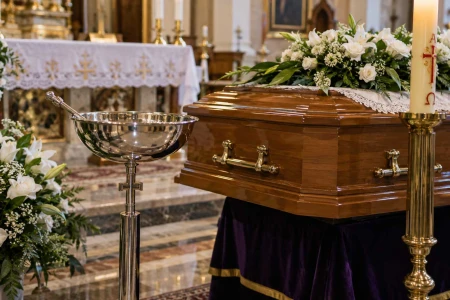
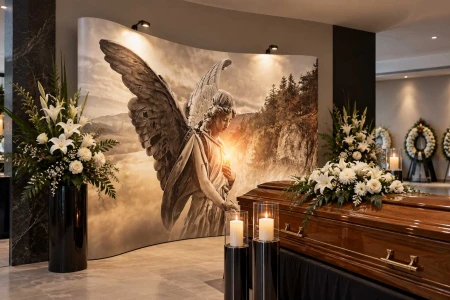
The chapel or farewell room is the place where a family spends some of the most difficult moments of their lives. Therefore, every element of this interior should communicate respect, dignity, and care. Appropriately selected furnishings – from the catafalque, through grave crosses, to lighting and decorations – create an atmosphere that either supports the grieving process or hinders it.
A professionally equipped chapel tells the family without words: "you are in good hands; we have taken care of every detail so that you can focus on saying goodbye." This is non-verbal communication in its purest form. A neglected interior, faded fabrics, unstable equipment – these elements, even if not commented on aloud, undermine trust in the funeral home's professionalism.
Comprehensive chapel furnishing sets, comprising a lectern, chairs, crosses, and decorative elements, make it possible to create an aesthetically cohesive and functional space in which every ceremony proceeds with due dignity. Investing in such furnishings is an investment not only in equipment but, above all, in the message that the funeral home sends to its clients.
The Graveside Ceremony – Professionalism in Every Detail
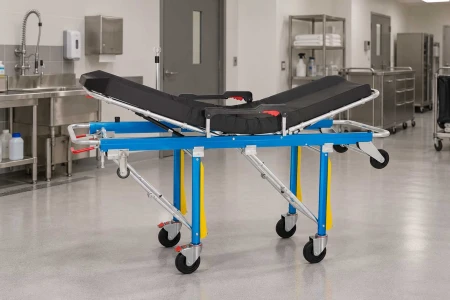
The ceremony at the grave is the culminating moment of the entire farewell process. It is precisely then that the family and loved ones stand before the finality of parting, and it is precisely then that the funeral home's professionalism is most visible. Every element of the outdoor ceremony organisation – from the funeral tent that protects against rain and wind, through the funeral trolleys ensuring dignified coffin transport, to aesthetically arranged wreath stands – communicates respect for the deceased and care for the mourners' comfort.
The funeral tent is a particularly eloquent element of this communication. Its presence tells the ceremony attendees that the organiser thought about their comfort, that they ensured rain, wind, or blazing sun would not disrupt this important moment. Personalisation of the tent, for example by placing the funeral home's logo and name on it, constitutes an additional message of professionalism and brand identity from a company that cares about its reputation.
A similar communicative function is served by retractable belt stanchions, which help to organise the ceremony space in a discreet yet effective way. Subtly delineating a zone for the immediate family, a zone for other guests, and the procession path are elements that wordlessly guide ceremony attendees and prevent chaos that could disrupt the solemnity of the moment.
Cremation and Urns – Communicating Respect in a New Form of Burial
The growing popularity of cremation poses new communication challenges for the funeral industry. Many families who choose cremation need reassurance that this form of burial is equally dignified and respected as a traditional coffin funeral. A professional funeral advisor should be able to speak about cremation in a way that highlights its dignity and significance, without comparing it to traditional burial in terms of "better" or "worse."
Appropriate accessories for urn ceremonies, such as elegant urn carriers, palls adapted for urn display, or special urn catafalques, help the family feel that their chosen form of burial is treated with full respect and professionalism. It is in these details that the true empathy of the funeral industry is expressed – in the ability to adapt to the family's needs regardless of the chosen form of farewell.
Communication with Different Cultural and Religious Groups
Modern societies are becoming increasingly culturally diverse, which means that funeral industry employees more frequently encounter families with different funeral traditions and communication expectations.
Intercultural Sensitivity in Practice
A funeral industry professional should possess at least basic knowledge of the funeral traditions of the major faiths and cultures present in their community. Muslim, Orthodox, Jewish, Protestant funerals – each has its own specifics, its own requirements regarding burial timing, body preparation, the course of the ceremony, and mourner conduct.
The key principle of intercultural communication is humility and a willingness to learn. Rather than assuming we know what the family's expectations are, it is worth directly asking about the traditions they would like to incorporate, about special requirements, and about elements that are particularly important to them. This approach is not a sign of ignorance but of respect.
Communication with Elderly and Disabled Persons
Elderly persons and persons with disabilities may have specific communication needs that are worth bearing in mind. A conversation with a hearing-impaired person requires clear articulation, maintaining eye contact, and a readiness to repeat information. Elderly persons may need more time to process information and make decisions.
Written communication, clear and legible informational materials, the possibility of telephone contact with a dedicated care representative who is available for questions – these are service elements that show the funeral home truly cares for every client, regardless of their age or ability.
Internal Communication Within the Funeral Team
The topic of professional communication in the funeral industry is not limited to client relations. Communication within the team is equally important – between funeral home employees, drivers, gravediggers, ceremony officiants, and advisors.
Sharing Information About the Family and the Ceremony
Every person on the team who has contact with the family or participates in organising the ceremony should possess consistent information about the client's expectations, the nature of the ceremony, and any special wishes. A situation in which the hearse driver is unaware that the family requested a particular procession route, or the gravedigger is uninformed about the family's preferences regarding the lowering of the coffin, can destroy all the communication effort invested at earlier stages.
Professional funeral homes implement internal communication systems such as ceremony cards, team briefs, or short pre-funeral meetings. This is an investment in message consistency, which the family perceives as a uniform, professional standard of service.
Psychological Support for Employees
Funeral industry employees are exposed to the phenomena of professional burnout and secondary traumatisation. Daily contact with pain, grief, and death leaves a mark that requires attention and care. A funeral home that looks after the psychological wellbeing of its employees simultaneously looks after the quality of communication with clients, because an emotionally exhausted employee cannot provide empathetic, fully present service.
Regular supervision sessions, access to a psychologist, an organisational culture that permits the expression of difficult emotions, and even such simple solutions as duty rotation and regular rest – these are elements that indirectly influence the quality of communication with every family the funeral home serves.
Digital Communication in the Funeral Industry
The modern funeral industry operates not only in the world of face-to-face meetings but increasingly in the digital space as well. The website, social media, email communication, and even the presentation of the offer in an online store – each of these channels requires a thoughtful communication approach.
The Website as the First Business Card
For many families, the funeral home's website is the first point of contact. It is there that they search for information about the offer, prices, range of services, and methods of contact. The website should be designed with people in difficult emotional situations in mind – legible, simple to navigate, with easily accessible contact information and the possibility of quickly scheduling a meeting.
The language used on the website should reflect the same values that the funeral home represents in direct client contact – empathy, professionalism, respect, and transparency. Avoiding corporate jargon, an overly marketing-oriented tone, and pushy sales tactics is crucial. A grieving family is not looking for promotions and sales. They are looking for a dignified partner in organising a loved one's farewell.
Blog and Educational Content as a Form of Communication
Running a blog or educational section on the funeral home's website is an excellent way to build trust and expert standing. Articles on topics such as preparing for a funeral, funeral traditions, support during bereavement, or indeed professional communication about death demonstrate that the funeral home is not just a service company but an organisation with a mission and knowledge.
Educational content also helps to "demystify" the topic of death and funerals, reducing the fear and uncertainty that accompany families facing the necessity of organising a ceremony. When someone has previously read an article about how the funeral organisation process works, the first conversation with a funeral advisor becomes considerably easier and more substantive.
The Future of Communication in the Funeral Industry
The funeral industry, like many other service sectors, is currently undergoing a period of intensive change. Client expectations are shifting, forms of burial are evolving, and technologies are advancing. All of this impacts how professionals in this industry communicate with their clients.
Personalisation as the Key to Empathetic Communication
An increasing number of families expect the funeral ceremony to reflect the individuality of the deceased rather than repeat a standard, impersonal script. This means that funeral advisors must develop the ability to gather information about the deceased and translate it into specific ceremony elements – from the choice of music, through the content of speeches, to decorations and the atmosphere of the space.
Personalisation requires deeper and more personal communication with the family, but at the same time it brings satisfaction to both parties. The family feels that the farewell truly captures the character of their loved one, and the professional has a sense that their work holds a deeper meaning than mere efficient logistical organisation.
Technologies Supporting Communication
Modern technologies, such as online ceremony streaming, virtual condolence books, or digital memorial albums, open new communication channels between the funeral home and the family. They also allow participation in the farewell by people who, for various reasons, cannot be physically present.
At the same time, technology will never replace human contact, a warm handshake, or the calm voice of an advisor who says "I am here for you." The best communication in the funeral industry is that which wisely combines modern tools with the timeless human need for closeness, understanding, and support.
Conclusion – Communication as an Expression of Respect
Professional and empathetic communication in the funeral industry is not a set of techniques to be memorised but an attitude that must be cultivated from within. It is a readiness to meet another person at one of the most difficult moments of their life and to accompany them with dignity, patience, and sensitivity.
Every element of a funeral home's work – from the first phone call, through the ceremony organisation, to the final farewell at the graveside – is an act of communication. Words, tone of voice, gestures, but also the quality of equipment, the care taken in preparing the space, and attention to detail are all components of a message that tells the family: "we respect your pain and will do everything to ensure your loved one's farewell is dignified and beautiful."
Investing in the development of employees' communication competencies and in professional funeral accessories and equipment are two sides of the same coin. One without the other does not build a complete picture of professionalism. Only the combination of empathetic communication with the highest quality of services and equipment creates an experience that the family will remember as dignified and supportive – and that will lead them to recommend that funeral home to others in the future.
The funeral industry is one of the few industries in which communication is not a sales tool but a form of care. And that is its greatest strength.
Frequently Asked Questions (FAQ)
What words should be avoided when speaking with a bereaved family?
When speaking with a family in mourning, it is advisable to avoid platitudes that may be perceived as trivialising their pain, such as "time heals all wounds," "at least they are no longer suffering," or "you need to be strong now." Such phrases, though spoken with good intentions, can provoke a sense of being misunderstood and of isolation. Simple and sincere expressions of sympathy work far better, such as "I am very sorry for your loss" or "I am here to help, whatever you may need." It is also worth avoiding comparisons to one's own experiences of loss, as every bereavement is unique and incomparable. The most important rule is this: it is better to say less but sincerely than more in a way that may be received as insincere or superficial.
How should one handle clients' emotions when discussing funeral costs?
The conversation about funeral costs is one of the most difficult elements of funeral communication, as it brings together two spheres that most people prefer to keep separate – emotions and finances. The key lies in transparency and the absence of pressure. A professional advisor should present a complete offer with clearly stated prices, explain what each item covers, and emphasise that a dignified ceremony is possible within any budget. It is advisable to begin the cost discussion by asking about the family's expectations and only then presenting proposals. One should never suggest that a more expensive option is "better" or apply pressure by appealing to feelings towards the deceased. It is also helpful to allow the family to familiarise themselves with the offer beforehand, for example via the website of the funeral equipment store, which helps avoid pressure during face-to-face meetings.
Should funeral industry employees undergo communication training?
Absolutely, and on a regular basis. Communicating with grieving persons is a competency that requires continuous development, not only because client expectations change but above all because working in constant contact with pain and death naturally leads to defence mechanisms that can negatively affect communication quality. Routine, emotional detachment, and the automation of behaviours are natural responses to difficult working conditions, yet at the same time they pose threats to an empathetic attitude. Training should encompass not only communication techniques but also elements of psycho-education regarding grief, stress management, conflict resolution, and intercultural communication. Organising group supervision sessions at which employees can share difficult experiences and collaboratively seek the best communication solutions is also a valuable practice.
How does the furnishing of the chapel and ceremonial space affect the family's perception of communication?
The impact of the physical environment on the perception of communication is enormous, though often unconscious. Environmental psychology clearly indicates that the space in which we find ourselves influences our emotions, behaviour, and the way we receive others' messages. In the funeral industry context, this means that even the best verbal communication can be undermined by a neglected chapel interior, unstable equipment, or a lack of attention to aesthetics. Conversely, a professionally furnished space with elegant catafalques, carefully selected palls, appropriate photo display stands, and flowers creates a context that reinforces the message of empathy and professionalism. A family that sees the funeral home has attended to every detail of the space subconsciously assumes that equal care will be applied to every aspect of the ceremony. This is why investment in high-quality funeral accessories and professional equipment is simultaneously an investment in the quality of communication with the client.
How should one communicate professionally with a family that has never organised a funeral before?
Families without experience in organising funerals present a particular communication challenge, as they often do not even know what questions they should ask. In such cases, the professional should assume the role of a guide who leads the family step by step through the entire process, explaining at each stage what is happening, why it is necessary, and what options are available. It is essential to avoid industry jargon and to use simple, comprehensible language. Rather than speaking of "consolation services" or "exhumation procedures," it is worth using descriptive phrases that do not require familiarity with funeral terminology. A good practice is also to prepare informational materials in the form of a brochure or website that the family can read at their own pace. It is also important to reassure the family that there are "no silly questions" and that the advisor is available for as long as needed. Such an attitude builds trust and makes the family feel cared for during one of the most difficult moments of their lives.