Table of Contents
- Legal Status and Cemetery Management in Poland
- Formal Procedures – From Notification to Burial
- Cemetery Infrastructure and Its Impact on the Course of the Ceremony
- The Course of the Ceremony – Differences in Farewell Scenarios
- Organising the Ceremonial Space – Terrain Challenges
- The Role of the Speaker and the Spoken Element of the Ceremony
- Chapel Equipment vs. Mobile Equipment – When the Funeral Home Must Rely on Itself
- Seasonality and Weather Conditions – How the Cemetery Type Affects Preparation
- Cooperation with Cemetery Administrators – Communication and Relationships
- Grave Crosses and Religious Symbols – A Practical and Aesthetic Aspect
- The Funeral Pall and Decorative Elements – Building a Cohesive Visual Setting
- Urn Ceremonies – A Growing Trend and the Specifics of Both Cemetery Types
- Practical Tips for Funeral Homes – How to Prepare for Both Scenarios
- Frequently Asked Questions (FAQ)
- Summary
Choosing a burial site is one of the most important decisions a family faces when dealing with the loss of a loved one. In Poland, two main types of necropolis operate side by side – municipal cemeteries managed by local government authorities, and parish cemeteries under the care of religious communities. Although they may appear similar at first glance, organising a funeral ceremony at each of them involves different procedures, formal requirements, and options for arranging the farewell space. For funeral homes, awareness of these differences forms the foundation of professional customer service, since the smooth, dignified, and trouble-free course of the entire ceremony depends precisely on an accurate knowledge of the regulations and specifics of both types of cemeteries.
This article has been written with funeral industry professionals in mind – owners and managers of funeral homes, masters of ceremony, and those responsible for burial logistics. We will take a detailed look at the legal, organisational, and technical aspects that distinguish ceremonies held at municipal cemeteries from those taking place at parish necropolises. We will discuss issues related to reserving a burial plot, documentation requirements, rules for using cemetery infrastructure, as well as the practical challenges that professionals face on a daily basis. We will also draw attention to the equipment that makes it possible to meet these challenges regardless of the type of cemetery.
Legal Status and Cemetery Management in Poland
Understanding the fundamental differences between a municipal and a parish cemetery requires reaching back to the legal foundations that regulate the functioning of Polish necropolises. The Act of 31 January 1959 on Cemeteries and the Burial of the Deceased, together with subsequent implementing regulations, clearly distinguishes these two types of facilities, assigning them different management structures and different sources of funding for their maintenance.
Municipal cemetery – local government administration
Municipal cemeteries are owned by the commune (gmina) and fall under the management of local government units. In practice, this means that responsibility for their maintenance, expansion, and day-to-day operation lies with the city or commune office, which most commonly delegates these duties to specialised municipal companies, city-owned enterprises, or entities selected through public tender. This management structure has far-reaching practical consequences for the organisation of funeral ceremonies.
Above all, municipal cemeteries are secular in character – they are open to all deceased persons regardless of religion, worldview, or religious affiliation. A person of deep faith, an atheist, a Muslim, or a Buddhist can all be buried at a municipal cemetery. This universality means that funeral homes handling ceremonies at municipal cemeteries must be prepared for a much greater diversity of rites than in the case of parish necropolises. The ceremony may take a religious form with a clergyman of any denomination, but it may equally well proceed in an entirely secular form, led by a funeral master of ceremony.
The working hours of a municipal cemetery's administration are generally strictly defined by regulations approved by the commune council. Ceremonies usually take place at set time intervals, often every hour or half-hour, which requires the funeral home to plan its logistics with precision. In large cities, where over a dozen funerals may take place on a single municipal cemetery in one day, time management becomes a key element of professional service. A delay in one ceremony creates a domino effect, impacting all subsequent farewells scheduled for that day.
Parish cemetery – church structure
Parish cemeteries are owned by the parish and fall under the management of the parish priest, who serves as the administrator of the necropolis. Decisions regarding the acceptance of burials, the location of graves, the rules of use, and the principles governing ceremonies are made by the parish authorities, often based on canon law and internal diocesan regulations. This is a fundamental difference compared to municipal cemeteries, where only secular law and regulations adopted by local government bodies apply.
In practice, this means that the right to burial in a parish cemetery belongs primarily to parishioners – individuals registered within the territory of the given parish or who are its members. Persons from outside the parish may be buried with the consent of the parish priest, which sometimes entails additional fees. This is important information for funeral homes, as it requires establishing the deceased's and the family's status in terms of parish membership in advance. It sometimes happens that a family wishes to bury a loved one in a parish cemetery with which they have no formal connection – in such cases, diplomatic mediation on the part of the funeral home is necessary.
Parish cemeteries are by nature associated with a specific denomination, most commonly Roman Catholic. This means that funeral ceremonies at such a cemetery are usually religious in character, and their course is closely linked to the funeral liturgy prescribed by the regulations of the given denomination. The funeral home must therefore cooperate closely with the parish regarding the scheduling, the course of the liturgy, and the presence of a clergyman. Flexibility regarding the form of the ceremony is considerably more limited here than at a municipal cemetery.
Formal Procedures – From Notification to Burial
Organising a funeral requires completing a number of formalities, the scope and nature of which differ depending on the type of cemetery. A professional funeral home should know these procedures inside out, so as to guide the family through this difficult process smoothly and without unnecessary complications.
Plot reservation and documentation at a municipal cemetery
At a municipal cemetery, the procedure begins with a notification to the cemetery administration office. The essential documents are, above all, the death certificate issued by the Civil Registry Office, the death card issued by the physician who certified the death, and – in the case of cremation – authorisation for the cremation of remains. The cemetery administration allocates a burial plot in accordance with the current land-use plan of the necropolis. In many cities, it is possible to reserve a plot in advance, allowing families to secure a grave location while the person is still alive.
Fees at a municipal cemetery are regulated by commune council resolutions and are public in nature, meaning the price list is transparent and the same for everyone. They cover the fee for the burial plot, the fee for digging the grave, and frequently also the fee for using the mortuary chapel or cemetery chapel. The funeral home should have an up-to-date price list for the given municipal cemetery, as families expect precise cost information at the planning stage of the ceremony.
It is worth noting that at many municipal cemeteries, the funeral home is required to notify the planned burial with a specified lead time – most commonly at least 24 hours before the scheduled ceremony. In large agglomerations, particularly during periods of increased numbers of deaths (e.g. in winter), dates may be booked several days ahead, requiring flexibility and the ability to react quickly on the part of funeral service staff.
Formalities at a parish cemetery
Procedures at a parish cemetery have an additional dimension – in addition to the standard secular documentation, it is necessary to complete ecclesiastical formalities. The parish priest or parish office typically requires the presentation of a death certificate, but also confirmation of parish membership, a certificate of reception of the sacraments (in particular the anointing of the sick), and the arrangement of the date and form of the funeral liturgy. In the case of persons from outside the parish, it may be necessary to obtain the parish priest's written consent for burial.
Fees at a parish cemetery are set by the parish and are not subject to local government regulation. In practice, this means they can differ significantly even between neighbouring parishes. In addition to the standard fee for the burial plot, the family usually bears the costs associated with the celebration of the funeral liturgy (the so-called Mass stipend), the fee for the services of the organist and sacristan, and sometimes also for decorating the church. The funeral home acts here as an intermediary and advisor, helping the family to understand the total costs and avoiding misunderstandings arising from the lack of a transparent price list.
An important difference also concerns the date of the burial. At a parish cemetery, the date of the ceremony must be agreed not only with the cemetery administration but, above all, with the parish's liturgical schedule. Funerals usually take place after the requiem Mass at the parish church, which means the entire course of the funeral day is closely tied to the schedule of services. The funeral home must therefore coordinate the logistics of transporting the coffin from the church to the cemetery, which requires appropriate equipment, including professional funeral trolleys available in the range offered by funeralne.com – funeral trolleys, which ensure the safe and dignified transport of the coffin both on paved surfaces and on unpaved cemetery paths.
Cemetery Infrastructure and Its Impact on the Course of the Ceremony
The condition of the cemetery infrastructure has a direct impact on the quality of the funeral ceremony being organised. The differences between municipal and parish cemeteries in this regard can be significant and require the funeral home to be appropriately prepared in terms of equipment.
Chapels, mortuary buildings, and technical facilities
Municipal cemeteries in larger cities typically have extensive infrastructure – mortuary buildings with cold rooms, ceremonial chapels equipped with sound systems and lighting, as well as paved pathways that allow funeral vehicles to drive directly to the burial site. Modern municipal cemeteries also offer ceremony halls with audio-video systems, enabling the organisation of online broadcasts for those who cannot attend the farewell in person. Professional funeral homes using such facilities can significantly raise the standard of the ceremony by utilising the available infrastructure to create a dignified and intimate farewell space.
At parish cemeteries, the situation is more varied. Large, historic parishes in cities often have cemetery chapels of a high standard, sometimes of considerable architectural and historical value. However, at smaller parish cemeteries, particularly in rural communes, the infrastructure can be significantly more modest. The lack of cold rooms, limited space in the chapel, unpaved paths, and no exterior lighting – these are challenges that funeral homes must contend with on a daily basis. In such situations, the funeral home's own equipment becomes crucial, allowing an appropriate standard of ceremony to be maintained regardless of the conditions encountered on site.
The importance of mobile ceremonial equipment
This is precisely why professional funeral homes invest in mobile ceremonial equipment that allows them to operate autonomously, regardless of the cemetery's infrastructure. One of the most important elements of such equipment is the funeral tent, which protects ceremony participants from rain, wind, or intense sun. High-quality funeral tents available at funeralne.com – funeral tents feature double-impregnated polyester fabric, a sturdy structure resistant to gusting winds, and an elegant finish with decorative valances. The funeral tent is a particularly essential piece of equipment for ceremonies at parish cemeteries in smaller towns, where the lack of roofed ceremonial spaces is the norm. Available in 3×3 and 3×4.5 metre sizes, they allow for the creation of an intimate, dignified farewell space even in the most demanding terrain conditions.
An equally important piece of equipment is the funeral catafalque – a special stand used to display the coffin or urn during the ceremony. At municipal cemeteries, catafalques are sometimes part of the cemetery chapel's equipment, but at parish cemeteries the funeral home most often needs to provide them itself. In the range offered by funeralne.com – catafalques, you will find foldable models with a load capacity of up to 350 kg, equipped with non-slip pads and a chrome finish. Compact dimensions when folded allow for easy transport in a service vehicle, and quick assembly enables swift preparation of the ceremony site.
The Course of the Ceremony – Differences in Farewell Scenarios
The actual course of the funeral ceremony differs fundamentally depending on the type of cemetery, and these differences have a direct bearing on the logistical and equipment requirements placed upon the funeral home.
Ceremony at a municipal cemetery
At a municipal cemetery, the funeral ceremony is generally uniform in terms of location – the entire event takes place on the grounds of the necropolis, in the cemetery chapel or directly at the graveside. If a funeral procession is organised, it proceeds from the chapel to the burial site, requiring the funeral home to plan the route and prepare the appropriate equipment for transporting the coffin within the cemetery grounds.
The flexibility of the ceremony's form at a municipal cemetery is decidedly greater than at a parish cemetery. The family may opt for a religious ceremony with a clergyman of any denomination, a secular farewell led by a master of ceremony, or even multi-faith ceremonies combining elements of different religious traditions. Funeral homes that specialise in ceremonies at municipal cemeteries should possess experience in organising diverse forms of farewell, as well as the appropriate equipment to arrange the ceremonial space according to the family's needs.
A key element of the ceremony's aesthetics at the graveside are wreath stands, which allow for the elegant display of floral arrangements around the burial site. Professional wreath stands, such as those available at funeralne.com – wreath stands, made from high-quality steel, ensure stability even on uneven ground and lend a distinguished character to the entire ceremony. At municipal cemeteries, where ceremonies take place at regular intervals, these stands must be quick to assemble and easy to transport between successive burials.
Ceremony at a parish cemetery
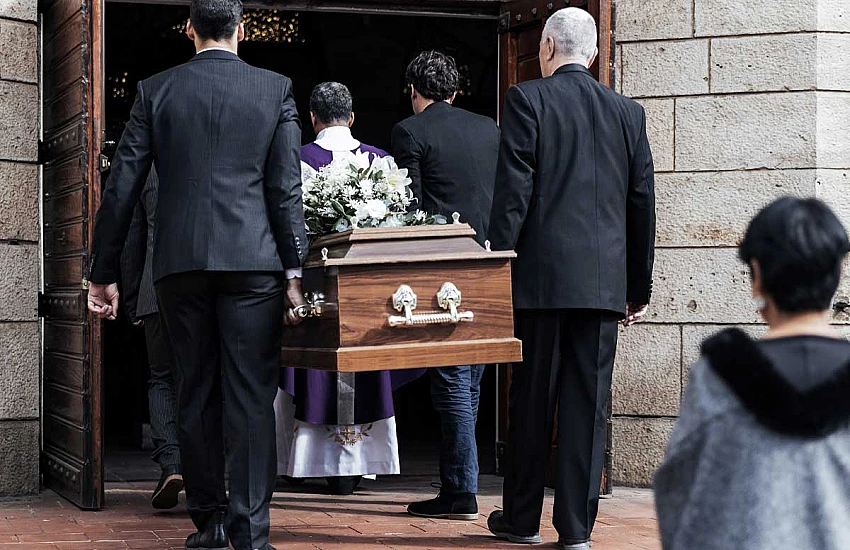
A funeral ceremony at a parish cemetery is usually a two-stage event. The first stage is the requiem Mass celebrated at the parish church, and the second is the burial at the cemetery. This two-stage nature has fundamental logistical consequences, as it requires the funeral home to coordinate the transport of the coffin between two locations. In cities where the church and the parish cemetery are not in immediate proximity, it is necessary to organise a motorised procession with a hearse. In villages and smaller towns where the cemetery adjoins the church, a walking procession is the traditional form of accompanying the deceased on their final journey.
The course of the funeral liturgy at a parish cemetery is strictly defined by the regulations of the Catholic Church and includes the rite of the final farewell, sprinkling with holy water, incensing the coffin, and the rite of committal with prayer and the casting of earth. The funeral home must provide the appropriate liturgical accessories – a dish for earth with a small shovel, a holy water sprinkler – and ensure an aesthetically pleasing arrangement of the burial site. At this stage, professional photograph stands prove particularly useful, allowing the portrait of the loved one to be displayed with dignity throughout the ceremony. Elegant models available in the range offered by funeralne.com – photograph stands allow for adjusting the height and style of the stand to match the character of the ceremony, both inside the church and in the open space of the cemetery.
Organising the Ceremonial Space – Terrain Challenges
Regardless of the type of cemetery, organising the space at the burial site requires the funeral home to have practical terrain knowledge and appropriate equipment. Every necropolis has its own specifics – the layout of pathways, the type of surface, the width of passages between graves, the slope of the terrain – and these factors determine the choice of equipment and the way the ceremony is conducted.
Surfaces, accessibility, and transport logistics
Municipal cemeteries, especially newer and larger ones, typically have paved main pathways that allow funeral vehicles to pass through. Many of them also have designated parking spaces for hearses and vehicles in the funeral procession. However, even at well-maintained municipal cemeteries, side paths and passages between sectors can be narrow, unpaved, and difficult to navigate with a heavy coffin on traditional stretchers.
At parish cemeteries, the terrain challenges can be even greater. Many of them have a centuries-old history, and their layout developed organically over the centuries without modern spatial planning. Narrow passages between old tombstones, uneven ground with tree roots, the lack of paved paths – this is the everyday reality at many parish necropolises. In such conditions, an all-terrain cemetery trolley becomes an invaluable piece of equipment, designed specifically for navigating difficult terrain. The model available at funeralne.com – funeral trolleys is equipped with large all-terrain wheels with circlip retainers and a robust steel construction with a load capacity of up to 300 kg. Its foldable design allows for easy transport in any service vehicle, while the solid build guarantees reliability even on the most demanding surfaces.
Arranging the farewell zone at the graveside
Professional arrangement of the ceremonial space directly at the graveside is an element that significantly raises the perceived quality of the funeral home's services. At municipal cemeteries, where the space between graves is planned with accessibility standards in mind, arrangement is relatively easier – there is room to set up a tent, wreath stands, a catafalque, and space for mourners. At parish cemeteries, particularly historic ones, every square metre is worth its weight in gold, requiring a creative approach to managing the available space.
A key element of space management are retractable belt barrier posts, which allow for the elegant demarcation of the ceremonial zone and prevent bystanders from accidentally entering the farewell area. Models with a gold frame and black belt, available at funeralne.com – funeral accessories, blend perfectly with the rest of the ceremonial equipment and lend the ceremony a solemn, professional character. They are easy to set up and transport, making them an ideal solution for both spacious municipal cemeteries and intimate parish necropolises.
The Role of the Speaker and the Spoken Element of the Ceremony
The spoken element of the funeral ceremony is one of the aspects in which the differences between a municipal and a parish cemetery are most visible. At a parish cemetery, the farewell speech is woven into the liturgy and led by the clergyman – the funeral homily, prayers, and liturgical chants form an integral part of the rite. The space for an individual farewell speech delivered by a family member or friend is limited and must be agreed in advance with the celebrant.
At a municipal cemetery, the farewell speech can be the central element of the entire ceremony, particularly in the case of secular ceremonies. The master of ceremony or a loved one of the deceased delivers eulogies, reminiscences, and reads letters of condolence. In such situations, a professional funeral lectern becomes an invaluable piece of equipment, lending gravitas to the ceremony and allowing the speaker to deliver their address comfortably. Elegant lecterns available in the range offered by funeralne.com – lecterns are made from wood and metal, available in various styles – from classic to minimalist – and constitute an important element of the funeral home's professional image.
Chapel Equipment vs. Mobile Equipment – When the Funeral Home Must Rely on Itself
One of the key practical differences between municipal and parish cemeteries is the question of chapel equipment and the extent to which the funeral home can rely on the infrastructure provided by the cemetery administrator.
Chapels at municipal cemeteries
Chapels at large municipal cemeteries are usually equipped with basic ceremonial equipment – a fixed catafalque, a sound system, mood lighting, and sometimes ventilation and air conditioning. However, the standard of this equipment varies widely. In cities that invest in the modernisation of their necropolises, chapels can offer conditions comparable to funeral homes. At older municipal cemeteries, particularly those with limited budgets, chapel equipment may be outdated, damaged, or simply insufficient for organising a ceremony to an appropriate standard.
Professional funeral homes that strive to maintain a uniform, high standard of service are increasingly choosing to invest in complete chapel kits, comprising colour-coordinated palls, ceremonial crosses, photograph and wreath stands, and candelabras. Such sets, available in the range offered by funeralne.com – chapel kits, make it possible to create a cohesive, elegant ceremonial setting regardless of the condition of the cemetery chapel's equipment. In this way, the funeral home builds a recognisable brand and guarantees families the same standard of service at every cemetery.
The specifics of chapels at parish cemeteries
At parish cemeteries, the cemetery chapel – if one exists at all – is usually smaller and more modestly equipped than at municipal cemeteries. Many smaller parish cemeteries have no chapel whatsoever, and graveside ceremonies are the only form of farewell on the grounds of the necropolis. In such cases, the entire burden of providing an appropriate setting falls on the funeral home, which must deliver and set up a tent, catafalque, stands, lectern, and all other elements of ceremonial equipment.
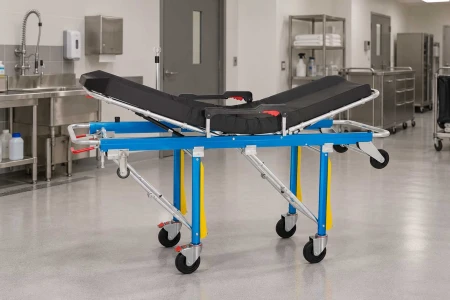
Transporting all the equipment requires efficient logistics and appropriate tools. Funeral stretchers with a waterproof bag are an indispensable piece of equipment for every funeral home operating at parish cemeteries, where the lack of funeral lifts and mechanical coffin-lowering systems is the norm. Robust, ergonomic stretchers with a footrest, available at funeralne.com – funeral stretchers, ensure staff safety and dignified transport even in the most challenging terrain conditions.
Seasonality and Weather Conditions – How the Cemetery Type Affects Preparation
Polish climatic conditions pose a significant challenge for the funeral industry, and their impact on the course of the ceremony varies depending on the type of cemetery and its infrastructure. Winter frosts, autumn downpours, and summer heatwaves demand flexibility from funeral homes and appropriate equipment preparation.
At municipal cemeteries with developed infrastructure, part of the ceremony may take place in a heated chapel, significantly improving the comfort of attendees during the winter period. Paved pathways are regularly cleared of snow by municipal services, and gravedigger teams have mechanical equipment for digging graves in frozen ground. However, even at well-managed municipal cemeteries, weather conditions can affect the ceremony schedule – heavy snowfall or icy pathways can delay or impede the burial process.
At parish cemeteries, the impact of weather conditions is considerably more noticeable. The lack of heated chapels, unpaved paths turning to mud after rain, and limited snow-clearing capabilities – these are the realities faced by funeral homes conducting ceremonies at rural and suburban parish necropolises. In such conditions, a professional funeral tent becomes not so much an element of prestige as an absolute necessity. Protecting ceremony participants from rain and wind, and in winter from frost and snow, is the funeral home's fundamental duty to the bereaved family.
Professional funeral tents offered by funeralne.com – funeral tents stand out for their resistance to weather conditions, including gusting winds of up to 100 km/h. Thanks to a special transport cover, the tent can be quickly transported and erected, which is invaluable in situations where the weather changes dynamically. Additionally, these tents offer the option of personalisation – printing the funeral home's logo on the valances is a subtle yet effective way of building brand recognition.
Cooperation with Cemetery Administrators – Communication and Relationships
The nature of cooperation between the funeral home and the cemetery administrator is another area in which the differences between municipal and parish necropolises are clearly felt in everyday practice.
Relations with municipal cemetery administration
Cooperation with a municipal cemetery administration is formal and bureaucratic in nature. The rules for using the cemetery, the hours for accepting burials, the service price list, and the equipment requirements – all of this is set out in the regulations and applied uniformly to all funeral homes. This formalisation has its advantages: transparency, predictability, and equal treatment. At the same time, it means less flexibility – negotiating exceptional dates or non-standard arrangements can be more difficult.
Funeral homes that operate regularly at large municipal cemeteries build working relationships with administration staff over time, which facilitates communication and the resolution of day-to-day problems. It is worth investing in these relationships, as smooth cooperation with the cemetery administration directly translates into the quality of service provided to families.
Relations with the parish and parish priest
Cooperation with the parish is of an entirely different character – it is much more personal and based on individual relationships. The parish priest is not only the administrator of the cemetery but also the celebrant of the funeral liturgy and the pastoral caretaker of the deceased's family. Funeral homes that build good relationships with the parish priests of local parishes gain an advantage in the form of better communication, greater flexibility in arranging dates, and more comprehensive cooperation on behalf of the family.
At the same time, dependence on the individual decisions of the parish priest can generate challenges. Rules may differ not only between parishes but also change after a change of parish priest. Certain practices accepted by one clergyman may be unacceptable in the view of his successor. That is why funeral homes should maintain ongoing contact with the parishes in their area of operation, regularly updating their knowledge of the current rules and preferences of individual parish priests.
Grave Crosses and Religious Symbols – A Practical and Aesthetic Aspect
Religious symbolism plays a different role depending on the type of cemetery, which has a direct bearing on the funeral home's offering and its preparation for the ceremony. At parish cemeteries, the cross is an inseparable element of the grave – its presence is required by the regulations and constitutes the fundamental symbol of the Christian faith. Choosing a grave cross is an important decision for the family, and the funeral home should be able to offer a variety of models to meet diverse aesthetic and financial expectations.
At municipal cemeteries, the rules regarding grave symbolism are more liberal – alongside traditional crosses, one finds symbols of other religions, as well as headstones without any religious symbolism. Nevertheless, the cross remains by far the most popular element of Polish headstones, regardless of the type of cemetery. In the range offered by funeralne.com – grave crosses, you will find both wooden models in a traditional style and modern metal crosses with a minimalist form. The variety of designs, heights, and finishes allows the symbol to be matched to the character of the grave and the family's preferences, which is particularly important in the context of ceremonies at parish cemeteries, where the cross is an integral part of the burial site's equipment from the very first day.
The Funeral Pall and Decorative Elements – Building a Cohesive Visual Setting
The visual setting of a funeral ceremony is an element that often determines how the family and participants remember the farewell. A professional funeral home ensures that every detail – from the colour of the pall on the trolley to the style of the wreath stands – creates a cohesive, harmonious whole. The funeral pall, the decorative covering on the catafalque trolley, serves not only a decorative function but also a symbolic one – its colour and craftsmanship reflect the gravity of the moment and respect for the deceased.
At municipal cemeteries, where ceremonies vary in character, it is worth having palls in several colour options – from traditional dark tones to muted shades of grey or navy. At parish cemeteries, where ceremonies are closely linked to the Catholic tradition, dark purple or black palls with gold or silver accents are the most common choice. In the range offered by funeralne.com – palls and funeral accessories, palls are available in a wide range of colours, with the option of ordering versions with decorative fringe that accentuate their elegance. Sets combining a scissor trolley with a matching pall are an economical and practical solution for funeral homes that wish to ensure the visual consistency of their equipment.
Urn Ceremonies – A Growing Trend and the Specifics of Both Cemetery Types
In recent years, Poland has witnessed a steady rise in the popularity of cremation, which has a direct impact on the nature of funeral ceremonies at both municipal and parish cemeteries. Urn ceremonies differ from traditional coffin burials in many respects – the amount of space needed for the arrangement, the type of equipment required, and the dynamics of the ceremony itself.
At municipal cemeteries, cremation and urn burial are treated as a standard form of interment, with no additional formal requirements. Many modern municipal cemeteries have columbaria – special structures with niches for urns – as well as dedicated urn sections. Urn ceremonies at municipal cemeteries proceed smoothly and without additional complications.
At parish cemeteries, the attitude towards cremation can be more complex. Although the Catholic Church has officially permitted cremation since 1963, the stance of individual parish priests may differ – some treat it as a fully legitimate form of burial, while others prefer traditional coffin burials and express reservations about cremation. The funeral home should know the position of the specific parish on this matter and inform the family accordingly, so as to avoid unpleasant situations on the day of the ceremony.
Regardless of the type of cemetery, an urn ceremony requires specific equipment. Urn carriers allow for the dignified conveyance of the urn from the crematorium or chapel to the burial site. In the range offered by funeralne.com – urn carriers, you will find professional carriers ensuring the safe and aesthetically pleasing transport of the urn during the ceremony. This is a detail of enormous significance to the family – the dignified carrying of the urn is a symbolic gesture of respect, comparable to the pall-bearing of a coffin by the closest family members.
Practical Tips for Funeral Homes – How to Prepare for Both Scenarios
A funeral home that wishes to serve ceremonies professionally at both municipal and parish cemeteries should treat preparation for both scenarios as an integral part of its business strategy. The differences between these types of necropolises are not merely a theoretical distinction – they have concrete, everyday consequences for logistics, equipment, and the approach to the client.
First and foremost, it is worth creating a knowledge base covering all cemeteries within the funeral home's area of operation. For each cemetery, this should include information about the administrator and contact details, the regulations, the price list, the available infrastructure, the condition of paths and surfaces, the availability and equipment of the chapel, as well as specific requirements and restrictions. Such a knowledge base, regularly updated, enables quick and professional advice to families regarding the choice of burial site and ceremony planning.
Secondly, investment in universal ceremonial equipment that will perform at every type of cemetery is the key to maintaining a uniform standard of service. A complete set comprising a funeral tent, a foldable catafalque, an all-terrain trolley, wreath and photograph stands, a lectern, barrier posts, and palls in several colour options enables full autonomy during the organisation of the ceremony – regardless of whether it takes place at a modern municipal cemetery equipped with the latest infrastructure or at a historic parish necropolis with no technical facilities whatsoever. A full range of professional funeral equipment is available at funeralne.com – full product range, where you will find all the necessary elements of funeral home equipment in one place.
Frequently Asked Questions (FAQ)
Can a religious ceremony with a clergyman be held at a municipal cemetery?
Yes, municipal cemeteries are open to all forms of funeral ceremony, both religious and secular. The family may invite a clergyman of any denomination to conduct a funeral rite on the grounds of a municipal cemetery – there are no restrictions in this regard. Equally, the ceremony may be entirely secular, conducted by a funeral master of ceremony. This is one of the main advantages of municipal cemeteries – their universality allows the form of the farewell to be fully tailored to the beliefs and wishes of the deceased's family. The funeral home should be prepared to organise both forms of ceremony, possessing experience in coordinating religious rites as well as competence in conducting secular farewells.
Can a non-believer be buried in a parish cemetery?
The question of burying a non-believer in a parish cemetery is complex and depends on the parish priest's decision and the diocesan regulations. Canon law provides that the faithful of the Catholic Church may be buried in a church cemetery, although in practice many parish priests consent to the burial of persons of other faiths or non-believers, particularly if they are related to parishioners already interred in the given cemetery. In such situations, the funeral home should contact the parish office well in advance to establish the conditions for a possible burial and to avoid misunderstandings on the day of the ceremony. It is worth remembering that a municipal cemetery, which accepts deceased persons regardless of denomination, is always an alternative.
What equipment should a funeral home bring to a ceremony at a parish cemetery without a chapel?
Complete equipment for a ceremony at a parish cemetery without a chapel should include a funeral tent to protect participants from the weather, a foldable catafalque for displaying the coffin, wreath stands, a photograph stand for the deceased's portrait, a lectern for speeches, barrier posts to demarcate the ceremonial zone, a funeral pall for the trolley, and an all-terrain trolley adapted for unpaved surfaces. All of this equipment should be compact and easy to transport so that it fits in a service vehicle. All the listed items are available at funeralne.com, which offers both individual products and complete sets tailored to the needs of funeral homes.
Are the fees for a plot at a municipal cemetery the same for everyone?
Fees at municipal cemeteries are set by commune council resolution and are public in nature, meaning they apply equally to all persons. The price list is transparent and available at the cemetery administration office and usually on the commune office's website. It covers fees for the burial plot (one-off or for a specified period, most commonly 20 years with the option of extension), the fee for digging and filling the grave, the use of the cemetery chapel, and any additional services. Price differences may exist between municipal cemeteries in different communes, but within a single necropolis, the price list is uniform. At parish cemeteries, the situation is different – fees are set by the parish and may differ even between neighbouring parishes.
How far in advance should one book a burial date at a municipal and a parish cemetery?
A burial at a municipal cemetery should usually be registered at least 24 hours in advance, although in large cities it is advisable to contact the administration as soon as the funeral date has been set, since popular time slots may be booked several days ahead. At a parish cemetery, it is necessary to arrange the date in advance both with the cemetery administration and with the parish office – the date and time of the funeral must align with the parish's liturgical schedule. It is recommended to notify at least 2–3 days in advance, although in the case of sudden deaths, parishioners can count on greater flexibility from the parish priest. The funeral home should act as the coordinator, ensuring the synchronisation of all elements – from reserving the plot, through the timing of the requiem Mass, to the organisation of transport and ceremonial equipment.
Summary
Organising a funeral ceremony at a municipal cemetery and a parish cemetery are two distinct scenarios that require a different approach, knowledge, and preparation from the funeral home. Municipal cemeteries offer greater flexibility in terms of the ceremony's form, transparent formal procedures, and typically better infrastructure. Parish cemeteries are associated with a richer liturgical tradition, closer relationships with the administrator, but also greater logistical challenges and less predictability.
A professional funeral home that wishes to serve both types of necropolis to the highest standard should invest both in substantive knowledge of the specifics of individual cemeteries and in universal ceremonial equipment enabling operational autonomy. Funeral tents, catafalques, all-terrain trolleys, wreath and photograph stands, lecterns, palls, and barrier posts – these are the elements that build the company's professional image and guarantee families a dignified farewell of their loved one, regardless of the place and circumstances of the burial.
We invite you to explore the full range of professional funeral equipment at funeralne.com, where you will find all the necessary accessories and equipment for organising ceremonies at every type of cemetery – from large urban municipal necropolises to intimate parish cemeteries in the Polish countryside.